


Peace lily care is straightforward, but only when the setup matches the space. Because peace lilies are tropical plants, they prefer filtered light, steady moisture, and stable indoor conditions. This popular houseplant (Spathiphyllum) tolerates moderate light and reacts quickly when conditions drift. Most problems don’t come from neglect. They come from excessive water, poor drainage, or placing the plant in a location where usable light never quite reaches.
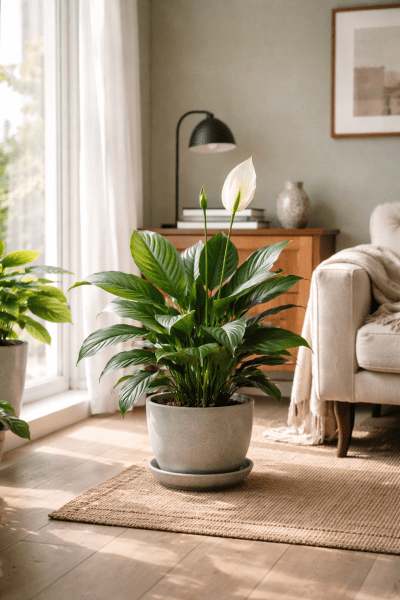
If you’re wondering how to provide proper care for an indoor peace lily plant without guessing, this guide breaks down the exact apartment setup, peace lily light requirements, and common failure patterns that matter most for consistent indoor peace lily care.
Disclosure: Some links are affiliate links. If you buy through them, we may earn a small commission at no extra cost to you.
Peace Lily Care – Quick Specs
| Category | Specification |
|---|---|
| Light Requirement | Bright indirect light (tolerates moderate light) |
| Watering Pattern | Keep soil lightly moist; allow top 2–3 cm to dry before watering |
| Drainage | Mandatory – pot must have a drainage hole |
| Humidity | Prefers moderate indoor humidity; avoid cold, dry drafts |
| Temperature Range | 18–27°C |
| Pet Safety | ❌ Toxic to cats and dogs (contains calcium oxalate) |
| Growth Habit | Upright, medium footprint |
| Growth Rate | Moderate — grows steadily indoors with proper light and moisture. |
| Flowering | Produces white blooms in adequate light |
| Difficulty Level | Moderate – sensitive to overwatering |
Should You Choose a Peace Lily?
A peace lily houseplant suits apartments where light is usable but not intense. It remains compact, maintains a full, leafy look year-round, and can produce white flowers when placed correctly. While not completely hands-off, it’s relatively easy to care for when light and drainage are balanced.
More importantly, this indoor plant doesn’t fail silently. When conditions shift, too wet, too dark, or poorly drained, a peace lily responds quickly, which makes adjustments easier before serious decline.
Best for:
- People who want an indoor plant that visibly reacts to better light and consistent care.
- Apartments with access to bright, indirect light near a window.
- Anyone who prefers a softer, fuller look over rigid, architectural plant.
Not ideal for:
- Homes with cats or dogs.
- Very dim spaces where natural light is limited most of the day.
- Anyone looking for a plant that tolerates long dry periods without noticeable drooping.
Peace Lily and Cats: Do Not Buy a Peace Lily If You Have Cats
When it comes to peace lilies and cats, the answer is clear: peace lilies are toxic if chewed or ingested. The plant contains calcium oxalate crystals, which can cause mouth irritation, drooling, and digestive discomfort in pets.
This isn’t a “just keep the plant out of reach” situation. Cats climb, jump, and explore. Even occasional exposure creates unnecessary risk. If your household includes cats, this houseplant is not a safe choice.
The same caution applies to small children who may handle or chew leaves. If pet or child safety is a concern, choose a non-toxic alternative instead.
Quick Fit Check: Is a Peace Lily a Good Fit for Your Space?
Choose a peace lily if:
- You can place it in bright indirect light near a window (not in direct sun).
- You’re comfortable with watering consistency, letting the top 2–3 cm dry before watering again.
- Your pot setup includes a drainage hole and saucer to prevent roots from sitting in water.
Avoid a peace lily if:
- Pets can access your plants, even occasionally.
- Your space is consistently dim, and placement can’t be improved.
- You prefer a low-maintenance plant that tolerates long dry periods without drooping.
Peace Lily Light Requirements: How Much Light It Actually Needs Indoors
Knowing how much light a peace lily actually needs indoors is what separates steady growth from slow decline. As a tropical indoor plant, a peace lily prefers bright indirect light, not direct sun, but not deep shade either.
In most apartments, the best place to put a peace lily is within a few meters of a bright window where the plant receives strong ambient light without harsh afternoon rays. An east-facing window is often ideal because it provides gentle morning light without overheating foliage.
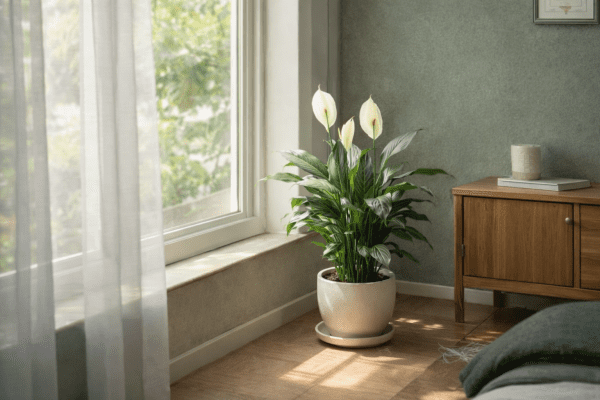
In lower indoor light, a peace lily may survive, but growth slows, and white flowers become less consistent. Stronger indirect light supports fuller leaves and more reliable blooming.
If your apartment doesn’t receive consistent bright indirect light, a compact LED grow light for indoor plants can help maintain healthy foliage and more reliable blooming — especially in darker rooms or during winter months.
What “Bright Indirect Light” Really Means in an Apartment
Bright indirect light doesn’t mean a sun-drenched room. It means the plant can “see” the sky without direct sun hitting the leaves.
Pro Tip: During the day, the room should feel clearly lit without artificial lights. Shadows should appear soft, not sharply defined. If the space looks dim at midday, move the plant closer to the window.
If leaves stretch, fade, or blooming stops, light is usually the limiting factor.
Why Peace Lilies Fail So Often With Watering
Most peace lily problems start with water, not too little, but too much. This plant prefers moist soil, not saturated soil. The difference is subtle, and that’s where many owners run into trouble.
When drainage is poor or watering is too frequent, roots remain constantly wet. Oxygen can’t reach them. Over time, leaves begin drooping even though the soil still feels damp. Many people respond by adding more water, which accelerates the decline.
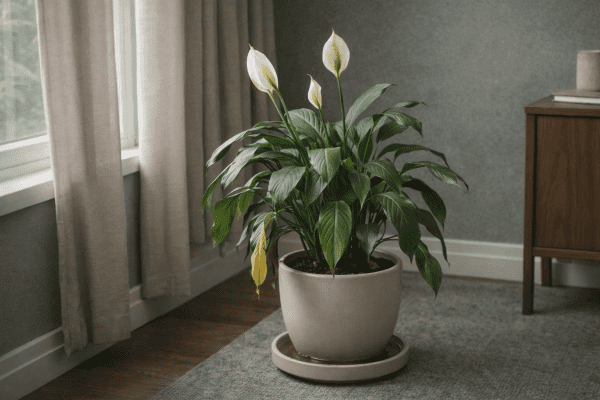
Letting the soil dry completely for long stretches isn’t ideal either. Balance matters. Keep the soil slightly moist, allow the top few centimetres to dry, then water your peace lily thoroughly and ensure proper drainage.
Overwatered Peace Lily: Why It Happens Indoors
An overwatered peace lily is often the result of indoor conditions, limited airflow, lower evaporation, or a pot without a proper drainage hole.
When a plant sits in water, or excess moisture collects at the base of the pot, roots begin to suffocate. This is how root rot develops. One of the first signs is that leaves start to droop even though the soil feels wet. As damage progresses, leaves may turn yellow and growth slows.
In apartments, evaporation happens slowly, which makes overwatering more common than underwatering. Preventing decline usually comes down to one thing: never allow the plant to sit in water, and always use a pot with a drainage hole.
If you’re unsure whether the soil is actually dry below the surface, a simple soil moisture meter can remove the guesswork and prevent accidental overwatering.
If you’re just getting started, we’ve also put together a beginner-friendly list of essential indoor gardening tools in our Affordable Indoor Gardening Supplies for Beginners guide.
Pot Size and Drainage That Actually Works for Peace Lilies
The pot determines how well watering works. A peace lily should always be planted in a container with proper drainage. Without it, excess water collects around the root ball and slowly weakens the plant.
Decorative pots without a drainage hole trap excess water around the root ball and significantly increase the risk of rot. If your current container doesn’t allow water to escape freely, consider switching to a ceramic plant pot with drainage hole and saucer to support healthy root structure and prevent moisture buildup.
When you repot, choose a container only slightly larger than the existing root ball. Oversized pots hold excess moisture and slow drying, increasing the risk of root problems. A moderate size increase, typically 2–4 cm wider than the current pot, is enough.
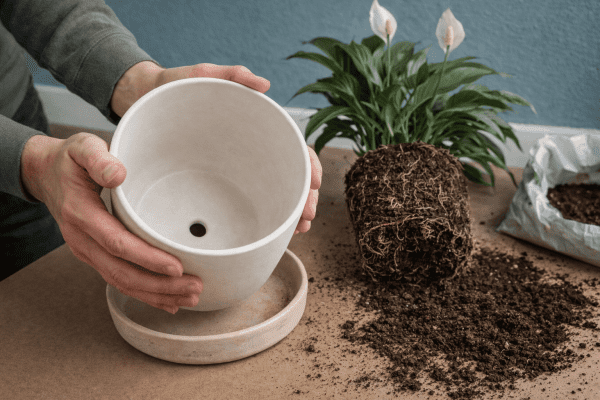
Repot only when roots are crowded or emerging from the base of the pot. Frequent repotting adds stress without improving growth.
Best Potting Soil for Peace Lily (Drainage Over Nutrition)
The best potting soil for peace lilies prioritizes drainage over heavy feeding. A light, well-aerated potting mix allows water to move through the container while retaining enough moisture to prevent sudden drying.
Standard indoor potting soil can work if it drains freely, but dense or compacted mixes should be avoided. Choose a potting mix designed for houseplants that maintains structure and does not remain waterlogged.
A reliable option is a well-draining indoor potting mix that includes ingredients like perlite or bark to improve airflow around the roots. This helps prevent compacted soil and reduces the risk of root rot in peace lilies.
A balanced houseplant fertilizer can support growth during the active season, but soil structure and drainage matter more than feeding frequency.
Pro Tip: Always empty the saucer 10–15 minutes after watering. Letting a peace lily sit in water is one of the fastest ways to trigger root stress.
Apartment Setup That Actually Works
A reliable indoor setup prevents most peace lily problems before they start.
Use a pot with a drainage hole and place your peace lily on a saucer to catch excess water. Never allow water to sit pooled at the base. After watering, empty the saucer if needed so the roots are not sitting in moisture.
Select a decorative modern indoor planter that suits your apartment style while still allowing airflow and proper drainage.
For indirect light placement, position the plant near a bright window but out of direct afternoon sun. Consistent, filtered light reduces stress and supports steady growth and flowering.
For moisture control, check the top 2–3 cm of soil before watering. If it still feels damp, wait. If dry, water thoroughly and allow all excess water to drain away completely.
A light application of fertilizer during active growth can help, but proper drainage, steady light, and consistent watering matter far more than feeding frequency.
Mistakes That Kill Peace Lilies Indoors
Most decline happens slowly, which makes small mistakes easy to ignore.
The most common issue is overwatering. Because peace lilies respond to dryness by drooping, many owners assume that leaves drooping always means the plant needs more water. In reality, chronic overwatering weakens roots and causes long-term stress.
Another frequent mistake is letting the plant sit in water after watering. Even with a drainage hole, leaving excess water in the saucer keeps the base saturated and increases root damage over time.
Placing the plant too far from the light is also common. In dim rooms, growth slows, flowering stops, and foliage becomes weak. While the plant may survive in low light, it will not thrive.
Brown leaf tips are often a result of inconsistent watering, mineral build-up, or environmental stress, not simply “old leaves.” Addressing moisture balance and light placement usually prevents this.
Avoid these patterns, and most indoor peace lily problems never escalate.
Peace Lily Yellow Leaves and Brown Tips: What They Actually Mean
Peace lily yellow leaves
Peace lily yellow leaves usually signal stress rather than immediate decline. When leaves turn yellow gradually, the plant is often responding to excess moisture around the roots or insufficient usable light.
If several lower leaves turn yellow at once, overwatering or consistently wet soil is the most common trigger. When yellowing develops slowly in a dim room, low light is often limiting healthy growth.
Yellowing is a feedback signal, not the problem itself. It indicates that water, light, or drainage conditions need adjusting.
Peace lily brown tips
Peace lily brown tips usually appear at the ends of the leaf tips and signal environmental stress rather than disease. In most apartments, the issue is linked to mineral accumulation from tap water, excess salts from fertilizer build-up, or inconsistent moisture levels.
Pro Tip: Flush the pot with distilled water every 2–3 months to reduce fertilizer and tap water buildup in the soil.
Over time, minerals in tap water can collect in the soil and irritate the roots, which shows first at the leaf tips. Switching to distilled water or filtered water can reduce this build-up and prevent further browning.
In areas with hard tap water, using a simple water filter pitcher can reduce mineral buildup that causes brown leaf tips — without needing to buy distilled water every week.
Brown tips rarely mean the plant is dying. They are an early warning that water quality, feeding frequency, or moisture balance needs adjustment.
Peace Lily Flowers: Why They Bloom, Turn Green, or Stop Appearing
Peace lily flowers are actually modified leaves (called spathes) that surround a central spike. Healthy plants produce white flowers when light, moisture, and overall care are consistent. If your peace lily isn’t flowering, or if the blooms change color, it’s usually a signal about conditions, not a random event.
Why a Peace Lily Produces White Flowers
A peace lily flower forms when the plant receives enough bright indirect light and stable moisture. While peace lilies tolerate moderate light, stronger indirect light supports more reliable white blooms.
If your plant has healthy foliage but no flowers, light is often the limiting factor. In very dim rooms, peace lilies may survive, but they rarely bloom.
Peace Lily Flowers Turning Green
Peace lily flowers will turn green, and in many cases, that is normal. As the bloom ages, the white spathe gradually shifts to green before fading. This is part of the natural life cycle.
However, flowers may also appear greener from the start if the plant is in lower light. Inconsistent lighting can reduce the brightness of white blooms and shorten flowering duration.
What to Do When Lilies Have Finished Flowering
If you’re wondering what to do when lilies have finished flowering, the answer is simple: cut the flower stem back to the base once the bloom turns fully green or begins to fade. Use clean, sharp indoor pruning scissors to make a smooth cut at the base where the stem meets the foliage.
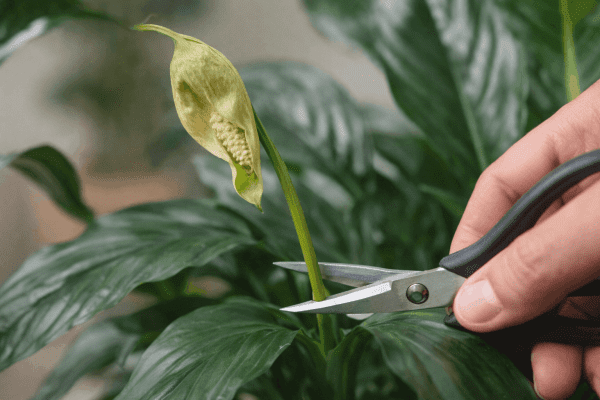
Removing spent blooms helps the plant redirect energy toward new foliage and future flowers. Continued bright indirect light, steady watering, and proper drainage support the next flowering cycle.
Peace Lily Problems and How to Fix Them
Peace lilies usually signal stress before they decline completely. Most indoor issues come down to light placement, drainage, or watering habits. Use the table below to match what you’re seeing with the most likely cause and the correct response.
Diagnostic Table
| Problem you notice | Likely cause | How to fix it |
|---|---|---|
| Peace lily yellow leaves (soft or limp) | Overwatering, poor drainage, or low light | Check that the pot has a drainage hole, allow soil to dry slightly before watering, and move closer to bright indirect light. |
| Peace lily brown tips | Mineral buildup from tap water, inconsistent watering, or fertilizer buildup | Switch to distilled water, flush the potting mix occasionally, and keep watering consistent (moist, not soggy). |
| Leaves drooping suddenly | Dry soil (underwatering) or plant sitting in water | Check soil moisture. If dry, water thoroughly. If wet, improve drainage and reduce watering frequency. |
| Peace lily is overwatered (yellow + droop + soggy soil) | Plant sitting in water, no drainage hole, compact soil | Repot into fresh potting mix with proper drainage and ensure excess water can escape. |
| No flowers / no white blooms | Too little indirect light or no fertilizer during active growth | Move closer to an east-facing window and feed lightly in spring and summer. |
| Pale leaves | Low light or nutrient deficiency | Increase light exposure and use a balanced houseplant fertilizer at half strength. |
| Leaves leaning toward one side | Light coming from one direction | Rotate the pot every few weeks for even growth. |
Most peace lily problems trace back to light placement, drainage, or watering balance. Once those are corrected, recovery is usually straightforward.
Alternatives If a Peace Lily Won’t Work for Your Apartment
Not every apartment suits a peace lily. If light is too low, pets are present, or watering consistency is difficult, a different indoor plant may be a better long-term fit.
If You Have Cats or Small Children
Peace lilies are toxic due to calcium oxalate crystals. If you cannot reliably keep the plant out of reach, consider safer options:
- Spider Plant – Pet-safe and tolerant of indirect light (see more options in our resilient indoor plants guide).
- Parlor Palm – A safer alternative with a similar soft, tropical look.
If Your Apartment Has Very Low Light
Peace lilies tolerate moderate light but struggle in consistently dim rooms. Better choices:
- Snake Plant – Handles low light and irregular watering (learn more in our Snake Plant apartment guide)
- ZZ Plant – Extremely tolerant of low-light indoor spaces (see more in our ZZ Plant apartment setup guide).
If You Forget to Water Often
Peace lilies droop dramatically when dry. If you prefer something more forgiving:
- ZZ Plant – Stores water in rhizomes and tolerates neglect.
- Cast Iron Plant – Extremely resilient and slow to show stress.
If You Want Guaranteed Blooms
Peace lilies produce white flowers only when light and care are well balanced. If flowering reliability matters most:
- Anthurium – Longer-lasting blooms with similar visual appeal.
Final Verdict: Is a Peace Lily Right for You?
Peace lilies thrive in apartments that provide stable indirect light and consistent, moderate care. When the apartment setup includes proper drainage, controlled moisture, and usable natural light, peace lily care becomes predictable and manageable.
This indoor peace lily isn’t a plant you ignore, but it clearly signals when something needs adjusting, which makes it easier to manage than many assume.
If your space can support the right apartment setup, indirect light placement, a pot with drainage, and steady watering, a peace lily can remain healthy and continue producing foliage and even white blooms for years.
If those conditions aren’t realistic in your home, a different indoor plant will likely perform better. The difference isn’t luck. It’s the setup.
Further Reading & Academic References
For university-based horticultural guidance on peace lily care, see:
Disclosure: Some links are affiliate links. If you buy through them, we may earn a small commission at no extra cost to you.

