

Affordable Indoor Gardening Supplies for Beginners
Starting your indoor garden doesn’t have to cost a fortune—or take up your whole living room. In fact, with the right indoor gardening supplies, you can grow fresh herbs, vibrant greenery, or even edible plants right from a small windowsill, shelf, or balcony corner. With just a few essential indoor gardening tools, you can simplify care and focus on growing, not guessing. And the best part? You don’t need fancy equipment or a green thumb to begin.
Many beginners feel overwhelmed by all the gear and gadgets out there, unsure of what they need versus what’s just nice to have. That’s where this guide comes in. We’ll walk you through essential tools, smart beginner tips, and affordable options that work—no fluff, no waste. Whether you’re working with a tight budget, a tight space, or both, this article will help you build a simple, low-cost setup that fits your lifestyle and your plants.
Disclosure: Some links are affiliate links. If you buy through them, we may earn a small commission at no extra cost to you.
Why Indoor Gardening Supplies Matter for Beginners
When you’re just getting started with indoor gardening, it’s easy to assume all you need is a plant and a pot. While that’s technically true, the reality is that having the right indoor gardening supplies can make the difference between a thriving plant and one that quietly wilts away on the windowsill.
Indoor gardening supplies are the practical tools and accessories that help you care for your plants with confidence. From watering cans to humidity monitors, these items simplify the process, save time, and reduce beginner mistakes like overwatering or poor light placement.
That said, not every tool is essential, especially if you’re on a budget. It helps to know the difference between “must-haves” and **“nice-to-haves.”
Here’s a quick breakdown:
- Must-Haves: A watering can, containers with drainage, quality potting mix, and basic tools like a trowel or scissors.
- Nice-to-Haves: Moisture meters, grow lights, plant stands, and decorative accessories.
As a beginner, it’s smart to start with the basics and add tools as your plant collection and confidence grow. You can check out some of our favourite beginner-friendly options in our guide to Top-Rated Indoor Gardening Tools That New Plant Parents Trust.
With just a few thoughtful supplies, even small-space gardeners can set themselves up for long-term success.
Top Essential Indoor Gardening Supplies for Beginners
Before you fill your space with greenery, it’s worth investing in a few core indoor gardening supplies that make daily plant care easier and more enjoyable. These tools aren’t just for experts—they’re made to help beginners feel confident, avoid common mistakes, and build healthy plant habits right from the start.
Below, we’ve rounded up some affordable, beginner-friendly essentials that deliver real results. Whether you’re watering a handful of houseplants or experimenting with propagation, these items will help you grow smarter, not harder.
Watering Can with Long Spout
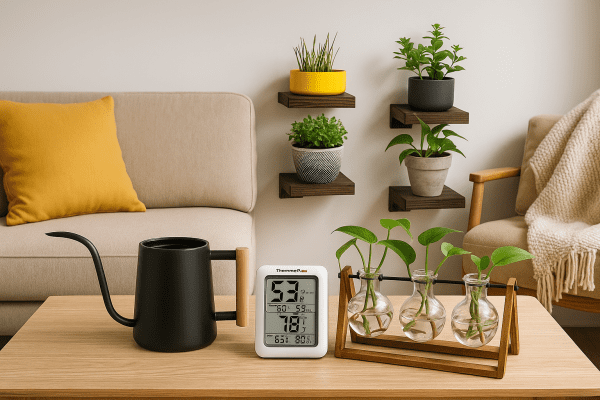
If there’s one item every indoor gardener needs, it’s a reliable watering can—but not just any watering can. A long-spouted design is especially helpful for beginners working with smaller pots or densely planted shelves. It allows you to water directly at the base of your plant without drenching the leaves or splashing soil everywhere.
This is particularly important for moisture-sensitive plants like Ferns, Calatheas, and African Violets, which can suffer from leaf spots or root rot if watered improperly. A long spout helps you control the flow and direction, reducing mess and minimizing overwatering—one of the most common mistakes new gardeners make.
Beyond function, the best indoor watering cans are also lightweight, easy to refill, and designed to fit in tight spaces. Look for models with a slim neck and ergonomic handle that make watering your indoor garden feel more like a ritual than a chore.
Recommended Tool: Stainless Steel Long Spout Watering Can – Compact & Stylish on Amazon
Designed for precision and ease, this sleek stainless steel watering can is perfect for small indoor spaces. Its long, narrow spout lets you reach tucked-away pots and deliver water exactly where it’s needed, without splashing your plant leaves or floor.

When your plants are tucked into corners, hung on walls, or lined up on a sunny sill, a standard watering can often just won’t cut it. A long-spouted watering can is one of the most practical upgrades you can make to your indoor gardening supplies toolkit.
Hygrometer (Humidity Monitor)
Humidity plays a crucial role in indoor plant health—yet it’s often overlooked by beginners. A hygrometer, or humidity monitor, helps you track the moisture level in your air, enabling you to make simple adjustments that can dramatically improve plant growth.
This is especially beneficial if you live in a dry apartment or during winter months when heaters pull moisture from the air. For tropical or moisture-loving plants like Fittonia (Nerve Plant), Boston Fern, or Anthurium, maintaining consistent humidity is just as important as watering.
Most digital hygrometers are compact, affordable, and beginner friendly. Many also include a temperature readout, giving you a more complete understanding of your plant’s growing environment. If levels dip too low, you can boost humidity with a pebble tray, room humidifier, or by grouping plants together.
Recommended Tool: ThermoPro TP50 Digital Hygrometer Indoor Thermometer on Amazon
This compact and reliable tool gives real-time humidity and temperature readings. It’s a simple yet powerful way to fine-tune your indoor space for healthy, thriving plants.

A hygrometer may not seem exciting, but for any indoor gardener trying to create the right environment, it’s one of the smartest indoor gardening supplies you can invest in.
Macrame Hanging Planters or Wall Shelves
When you’re short on floor space but still want to grow your indoor garden, it’s time to get creative with your vertical space. Macrame hanging planters and wall-mounted floating shelves are two beginner-friendly ways to bring plants into your home, without sacrificing precious space.
These space-saving solutions are perfect for trailing plants like English Ivy, Tradescantia, or Peperomia, which thrive when they can hang or cascade naturally. Hanging planters add a soft, boho-inspired touch, while wooden shelves offer a clean, modern vibe—both ideal for apartment dwellers and renters working with limited square footage.
Recommended Products:
- Macrame Plant Hanger Set:
MIPON 3 Pack Macrame Plant Hangers – Indoor Hanging Planters on Amazon
This trio of handcrafted cotton rope hangers includes multiple lengths and designs, complete with hooks for easy setup. They accommodate a variety of pot sizes, adding visual texture and vertical greenery to your space. - Wood Floating Shelves:
Fixwal Wall-Mounted Floating Plant Shelves – Set of 3 on Amazon
These rustic carbonized wood shelves are both stylish and functional. They’re sturdy enough for small potted plants and come with a safety rail to help keep your greenery secure—perfect for showcasing vines, herbs, or decorative containers.


By elevating your plants (literally), these display options turn unused walls into living features—and help you make the most of even the smallest indoor spaces.
Light Meter
Understanding the light conditions in your home is crucial for the health of your indoor plants. A light meter helps you accurately measure the intensity of light in different areas, ensuring your plants receive the appropriate amount they need to thrive.
This tool is especially beneficial for plants like Begonia, Alocasia, and Calathea, which are sensitive to light levels. By using a light meter, you can identify the best spots in your home for these plants or determine if supplemental lighting is necessary.
Recommended Product:
- Dr.Meter LX1330B Digital Illuminance Light Meter:
This digital light meter measures up to 200,000 lux, providing precise readings to help you assess the lighting conditions in your home. It’s user-friendly and suitable for both beginners and experienced indoor gardeners.

Incorporating a light meter into your gardening toolkit allows you to make informed decisions about plant placement and lighting, promoting healthier growth and reducing the risk of light-related issues.
Seed Starter Kit or Propagation Set
Starting your indoor garden journey is a whole lot easier with the right tools, and seed starter kits or propagation sets are two of the most beginner friendly. These all-in-one kits give you everything you need to start seeds or root cuttings without complicated setups, making them a smart and affordable choice for new plant parents.
If you’re planning to grow herbs or easy-to-propagate plants like Spiderettes or Coleus, these kits offer a controlled space for strong root development. Many starter trays even include humidity domes and self-watering systems to take the guesswork out of germination. Meanwhile, propagation sets provide an eye-catching way to grow new plants from stem cuttings in water, no soil, no mess.
Recommended Products:
- Patigrow 60-Cell Self-Watering Seed Starter Tray with Grow Light
This complete kit includes everything from LED grow lights to a humidity dome and self-watering system—perfect for beginners looking to start an indoor herb garden. - XXXFLOWER Glass Propagation Station with Wooden Stand
This beautifully designed tabletop propagation set includes three bulb-style vases mounted on a wooden frame—ideal for rooting plant cuttings like tradescantia, or peperomia while doubling as home décor.


Whether you want to grow from seed or multiply your current collection, a starter kit or propagation set is an essential part of any well-rounded indoor gardening supplies list.
How to Build Your Indoor Garden on a Budget
Starting an indoor garden doesn’t mean you need to spend a fortune. In fact, some of the best setups come from a little creativity, a few essentials, and smart shopping. With the right mix of resourcefulness and planning, you can build a healthy, beautiful garden for far less than most people think.
One of the easiest ways to save money is by repurposing everyday items as containers. Got an old mug, tin can, or mason jar? That’s a planter waiting to happen. Just be sure to add drainage holes or use a layer of rocks at the bottom to protect the roots. These DIY pots add personality and keep costs down, especially when paired with low-maintenance plants.
Another way to keep your setup affordable is by shopping in bundles or starter kits. All-in-one kits often cost less than buying each tool separately and are a great entry point for beginners. When comparing options, look for durability over aesthetics, because cheap gardening supplies that break after a few uses will cost you more in the long run.
That said, be cautious with bargain-bin tools that look too good to be true. Flimsy pruners, shallow pots without drainage, or weak suction planters can cause more frustration than they’re worth. Instead, invest in durable indoor gardening tools that can serve multiple plant types and save you time in the long run. Instead, prioritize items that are functional, long-lasting, and suited to your specific space and plant types.
You don’t need to buy fancy gadgets to keep your plants hydrated — with just a few recycled materials, you can build a simple system that waters your plants automatically. Download our FREE DIY Self-Watering System Planner for step-by-step illustrated instructions to create a low-cost, low-maintenance watering system that fits any small-space garden.
For more inspiration on what tools are worth it, check out our guide on Simple Indoor Gardening Tools That Make Plant Care Easy. It’s packed with beginner-tested recommendations that won’t break the bank.
With a little creativity and smart spending, you can build a thriving indoor garden—no matter your budget or the size of your space.
Beginner-Friendly Shopping Tips (What to Look For)
When you’re just getting started with indoor gardening, the options can feel overwhelming. From pots to tools to plant stands, it’s easy to get lost in product pages and end up with supplies that don’t fit your space or needs. That’s why having a smart, beginner-friendly shopping mindset is so important.
Let’s start with materials. While plastic pots are lightweight and inexpensive, they can trap excess moisture, something that many houseplants don’t appreciate. Look for breathable options like unglazed terracotta or fabric grow bags, which allow air to circulate and help prevent overwatering. They’re especially practical if you’re still learning your plant’s watering rhythm.
Next, think about size and scale. In small apartments, oversized containers and tall tools can quickly become clutter. Choose compact or stackable items that can be tucked onto windowsills, hung on walls, or stored easily between uses. A small watering can or foldable potting mat might not look exciting, but they’ll fit seamlessly into your daily routine.
One powerful approach? Build a simple shopping checklist based on your space, light availability, and plant type. Focus on quality over quantity and invest in a few core pieces that will make your setup efficient and enjoyable.
A practical shopping strategy doesn’t just save money—it saves time, energy, and frustration. By choosing the right materials and tools from the start, you’ll be setting yourself up for a smooth, satisfying gardening experience that fits your lifestyle.
FAQs About Indoor Gardening Supplies
What do you need to start an indoor garden?
Starting an indoor garden is simpler than it looks. At the very least, you’ll need a few basic indoor gardening supplies: a container with drainage, quality potting mix, a watering method (like a long-spout watering can), and a light source—either natural or supplemental. From there, you can add helpful tools like a trowel or plant scissors to make care easier. If you’re growing from seed, a starter tray with a humidity dome is also a good idea. Most importantly, choose supplies that match your space and light availability. You don’t need everything on day one—just the right tools to care for your first few plants confidently.
What equipment do I need to start a garden?
You don’t need a full-blown tool shed to start a thriving indoor garden. A small set of starter tools will do just fine. Look for basics like a trowel, pruners, and a watering can, but also consider environmental tools like a thermometer or hygrometer, especially if you live in a dry apartment. A shelf or wall-mounted setup can also make the most of vertical space and improve light access for your plants. Start small with equipment that fits your space, then add more as your garden grows. Think function first—you can always upgrade or expand later.
What is the most beginner-friendly gardening supply?
If you’re just starting out, two tools stand out for ease and impact: a light meter and a watering can with a long spout. The light meter helps you place your plants where they’ll thrive, saving you from guesswork and disappointment. The watering can, on the other hand, makes daily care simple and spill-free, especially when your plants are in tight spots. Both tools are affordable, beginner-approved, and highly effective for preventing common indoor plant issues. Sometimes it’s the simple things that make the biggest difference.
What’s the cheapest way to build an indoor garden?
Starting an indoor garden on a budget is all about creativity. Repurpose jars, mugs, or tin cans as planters, and use shelves or windowsills instead of buying special racks. A bag of potting mix and a few cuttings from a friend can get you started for almost nothing. If you want to add a little more structure, choose affordable indoor gardening supplies like a watering can, grow lights, or seed starter trays. These low-cost tools stretch your budget while still giving your plants what they need to thrive.
Can I build an indoor garden in a really small apartment?
Absolutely! Even the tiniest spaces can become green havens. Hanging planters, wall-mounted shelves, and compact containers are smart space-saving choices. Self-watering pots or propagation stations keep care simple without taking up valuable floor area. For renters or those in tight quarters, compact indoor gardening supplies such as digital hygrometers and clip-on grow lights make it possible to grow a variety of plants without cluttering your home.
Do I need special tools to start my first indoor garden?
You don’t need a shed full of tools—just a few beginner-friendly essentials. A watering can with a long spout, a light meter, or a simple hygrometer can go a long way in setting you up for success. These indoor gardening supplies help you water precisely, track your environment, and position plants for healthy growth. Over time, you can add extras like self-watering seed trays or decorative macramé hangers, but the basics are more than enough to start confidently.
Final Thoughts: Start Simple, Grow Confidently
Indoor gardening doesn’t have to be complicated or expensive, and that’s what makes it so rewarding. With just a few thoughtfully chosen indoor gardening supplies, you can create a peaceful, green corner that brings life to your home and joy to your routine.
The key is to start small. You don’t need to buy everything at once or have the perfect setup on day one. Begin with tools that solve real problems—like a watering can that reaches tucked-away pots or a light meter that helps you find the sunniest windowsill. A few core indoor gardening tools go a long way toward creating a routine that feels intuitive and rewarding. As your plants grow, so will your confidence. And as your confidence grows, you’ll naturally expand your garden and your toolkit in a way that feels both practical and personal.
Ready to take the next step?
Visit our full Indoor Gardening for Beginners guide for more tips and inspiration.
And don’t forget to bookmark the Getting Started Guide so you always have a trusted resource on hand.
You’ve got everything it takes to grow something great—one pot, one tool, one plant at a time.
Disclosure: Some links are affiliate links. If you buy through them, we may earn a small commission at no extra cost to you.
