

Snake Plant (Sansevieria / Dracaena trifasciata): Easy Apartment Care Guide
The Snake Plant is one of the most recommended low-maintenance plants for apartments and small spaces, but it only works well when the setup and placement are right. This page helps you decide if a Snake Plant is a good fit for your home, explains the few rules that matter, and shows the simplest setup that prevents the most common failures before you buy.
Disclosure: Some links are affiliate links. If you buy through them, we may earn a small commission at no extra cost to you.
How This Page Helps You Decide
If you’ve already watched the video, this page is where everything gets locked in and made practical. Below, you’ll find the exact placement ranges, setup rules, and apartment-specific checks that are hard to judge on video alone, especially things like window distance, pot choice, and watering mistakes that cause silent failure.
Use this page as your no-guesswork reference before buying or setting up a Snake Plant, so what you place in your home actually works long term, not just on day one.
Snake Plant Success Specs (Quick Overview)
- Light: Bright to medium indirect light
(Performs best within ~0.5–2 m of a window; deeper rooms need a small grow light) - Typical Size Indoors: ~60–90 cm tall × 25–30 cm wide
- Footprint: Small base, vertical growth (good for tight spaces)
- Effort Level: Low
- Water Needs: Very low (must dry out fully between watering)
- Power Required: No (only if placed far from windows)
- Pet Safe: ❌ No
- Mess Risk: Low (with proper drainage)
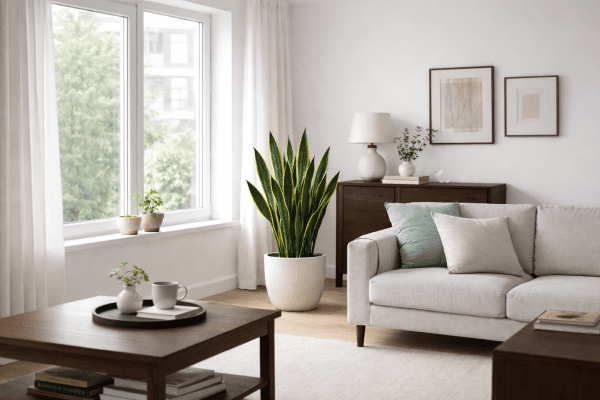
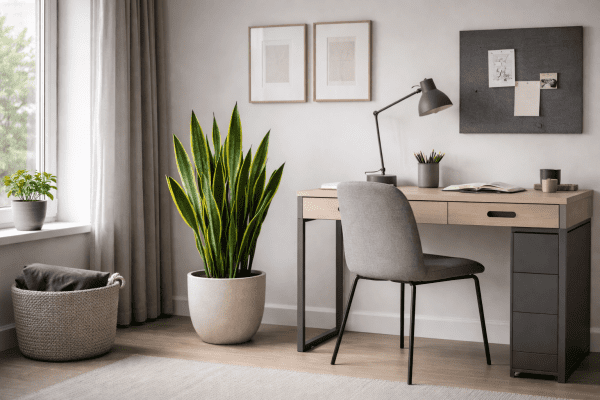
- Vertical Scale Reference: This size typically fits comfortably beside a sofa, desk, or on the floor next to a standard bookshelf.
Is a Snake Plant Right for Your Apartment?
Verdict: A Snake Plant is an excellent apartment plant as long as you can keep it dry between waterings and place it within window range.
- Best for: Busy households, beginners, and small apartments where a tall, low-effort plant is needed without taking up much floor space.
- Not for: Homes with pets that chew plants, or anyone who tends to water plants “a little bit, often.”
Non-negotiables for success:
- Light: Place it within ~0.5–2 m of a window or add a small grow light if it needs to sit deeper inside the room.
- Water: Let the soil dry out completely before watering again, this matters far more than sticking to a schedule.
- Stability: Use a pot with good drainage and enough weight to prevent tipping as the leaves grow taller.
If those three conditions are met, a Snake Plant is one of the most forgiving indoor plants you can grow in an apartment.
When a Snake Plant Is a Bad Fit
A Snake Plant is very low-maintenance, but it isn’t the right choice for every home or care style. You’ll likely be happier with a different plant if any of the following apply:
- You have pets that chew or nibble plants; Snake Plants are not pet safe, and chewing is the main risk. If ingested, they can cause mild symptoms such as drooling, vomiting, or stomach upset in pets.
- Your only available spot is a dark interior corner, and you don’t want to use a grow light.
- You tend to water plants on a routine schedule instead of waiting for the soil to dry out fully.
- You prefer plants with soft or flexible leaves; Snake Plant leaves are stiff and don’t recover once bent or snapped.
- The plant needs to sit in a narrow walkway or beside seating, where tall leaves are likely to be bumped.
- You’re looking for fast, visible growth to fill a space quickly, this plant grows slowly indoors.
Snake Plants do best with a hands-off approach and a simple setup. If you enjoy frequent watering or active care, another plant will usually be a better fit for your apartment and your habits.
Quick Fit Check for Apartments
Choose This Plant If…
- You have a spot within ~0.5–2 m of a window, even if the light isn’t bright all day.
- You want a plant that doesn’t punish missed watering and tolerates neglect.
- You need something tall and vertical that won’t take up much floor or shelf space.
- You prefer plants that stay tidy and contained rather than spreading outward.
- You’re happy to use a drainage pot and fast-draining soil to avoid overwatering issues.
Avoid This Plant If…
- You need a pet safe plant within reach of cats or dogs.
- Your only placement option is deep inside the room and you don’t want to add a grow light.
- You enjoy watering plants frequently or keeping soil slightly moist.
- You want a plant that fills a space quickly or changes appearance often.
- The plant will sit in a high traffic area where tall, stiff leaves are likely to be knocked.
What a Snake Plant Actually Needs to Thrive Indoors
A Snake Plant doesn’t need much, but the few things it does need matter a lot. Getting these basics right is the difference between a plant that quietly survives for years and one that slowly declines without obvious warning signs.
Light (Apartment Framing)
Snake Plants are often described as “low light plants,” but indoors they still need some access to natural light to stay healthy.
- The ideal placement is within ~0.5–2 m of a window with indirect light.
- North or east facing windows usually work well in apartments, even if the light isn’t strong all day.
- If the plant is placed more than ~2–3 m from a window, growth will slow significantly and leaves may lose firmness.
- In deeper rooms or windowless areas, a small grow light becomes necessary for long-term success. A basic, low-wattage full-spectrum grow light is sufficient, standard household LED bulbs are usually not strong enough for sustained growth.
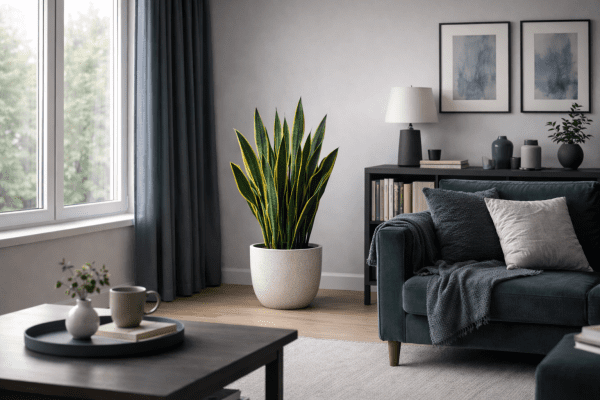
Indoors, most Snake Plants grow slowly and may only produce a few new leaves per year, especially in moderate light.
If a Snake Plant starts leaning toward one side, it’s usually reacting to light. A simple quarter turn every few weeks keeps growth upright and balanced.
Water (Failure Prevention)
Watering is the most common reason Snake Plants fail indoors, not because they need much, but because they’re given too much.
- Always wait until the soil is completely dry before watering again.
- It’s better to water deeply and infrequently than to add small amounts often.
- Watering on a fixed schedule is risky; dryness matters more than timing.
- In cooler months or low-light rooms, watering frequency should drop even further.
If you’re unsure whether the soil has fully dried, especially in deeper pots, a simple analog moisture meter (one of the tools we recommend in our guide to simple indoor gardening tools that make plant care easy) can help confirm what’s happening below the surface.
A Snake Plant will tolerate being dry far better than sitting in damp soil.
Pot & Soil (What Actually Matters)
The pot and soil setup matters more than most people expect, especially in apartments where airflow is limited.
- The pot must have drainage holes, this is non-negotiable.
- Use a fast-draining, airy soil mix, such as a cactus or succulent blend.
- Avoid dense or “moisture-control” soils, which stay wet too long indoors.
- Slightly snug pots are better than oversized ones, which hold excess moisture.
- Because Snake Plants grow tall, the pot should have enough weight or a wide base to prevent tipping. Heavier materials like ceramic, terracotta, or stone-filled planters provide better stability than lightweight plastic pots.
Most root problems happen below the surface, long before leaves show stress.
Temperature & Environment
Snake Plants are comfortable in normal indoor conditions, but there are a few apartment specific things to watch for.
- They prefer stable temperatures and don’t like cold drafts or sitting against chilly window glass in winter.
- Temperatures consistently below ~10°C can slow growth and increase the risk of damage.
- Average indoor humidity is fine, no misting or special treatment is needed.
In apartments, conditions like humidity and airflow can be harder to judge than light. A simple indoor hygrometer can help you confirm whether the room is staying damp for too long between waterings — which is often the hidden cause of slow Snake Plant decline.
Extension research confirms that snake plants tolerate typical indoor temperatures well, but prolonged cool conditions combined with excess moisture significantly increase the risk of root and rhizome rot (North Carolina State Extension’s snake plant care guide).
As long as the plant is kept warm, dry between waterings, and out of cold airflow, it will adapt well to apartment living.
Simple Apartment Setup That Actually Works
You don’t need a complicated setup for a Snake Plant, but the right basics matter. Most problems come from small setup shortcuts, usually around drainage, soil, or pot stability that slowly cause issues over time.
The goal here is simple: create a setup that dries properly, stays stable, and fits apartment life without constant adjustment.
Minimum Setup That Works
This is the simplest configuration that prevents the most common failures and works reliably in apartments:
- A pot with drainage holes
This is non-negotiable. Drainage allows excess water to escape so roots don’t sit in damp soil, which is the fastest way to lose a Snake Plant indoors. - Fast-draining soil
A cactus or succulent-style mix allows water to move through quickly and lets the soil dry out fully between watering, a fast-draining cactus and succulent soil mix like this one helps prevent root rot indoors. - A stable, weighted pot or wide base
Snake Plants grow tall, and light plastic pots tip easily, especially in tight spaces. A heavier pot or wider base keeps the plant upright and reduces accidental damage (something like a heavy ceramic planter with drainage). - A saucer or waterproof tray
This protects floors, shelves, and windowsills from runoff while still allowing proper drainage after watering, a low-profile plant saucer or waterproof tray works well indoors..
If the plant sits on carpet or wooden furniture, water it in a sink or shower first, then return it once excess water has fully drained.
- Window-range placement
Place the plant within ~0.5–2 m of a window with indirect light. A grow light is only needed if the plant sits deeper inside the room.
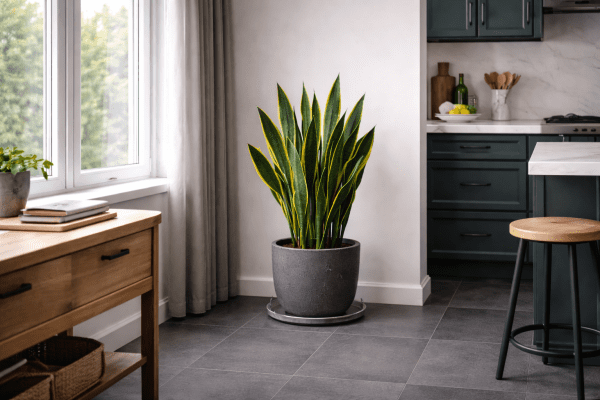
With this setup, a Snake Plant becomes a true low-effort plant, one that doesn’t need frequent attention or constant correction to stay healthy.
Optional Upgrade for Stability and Better Light
If your Snake Plant sits directly on the floor and the setup already works, you don’t need to change anything.
That said, in small apartments, a simple plant stand can quietly solve two common issues at once: stability and light exposure.
Raising the plant slightly off the floor helps keep tall Snake Plants from being bumped or tipped over in high-traffic areas, especially when using heavier ceramic pots. It also lifts the leaves closer to window level, where indirect light is usually more consistent than near the floor.
A sturdy, mid-height plant stand with a wide base works best in apartments, as it adds elevation without making the plant feel top-heavy or unstable. Wooden stands designed for medium-to-large pots are a good option if you want something that blends into living spaces rather than looking like gardening equipment.
This is an optional upgrade, not a requirement, but for many apartment layouts, it’s an easy way to improve both plant health and day-to-day practicality without changing the care routine.
Common Snake Plant Mistakes to Avoid
Most Snake Plant problems aren’t caused by neglect, they’re caused by too much help. Avoiding these common mistakes will do more for long-term success than any special care routine.
- Watering on a schedule
Snake Plants don’t follow calendars. Watering weekly or “just a little” often keeps the soil damp, which leads to root problems. - Using pots without drainage
Even careful watering won’t help if excess water has nowhere to escape. No drainage almost always leads to rot over time. - Planting in dense or moisture-retaining soil
Standard potting mixes stay wet too long indoors. Fast-draining soil is critical, especially in cooler or low-light rooms. - Placing the plant in very low light and expecting it to adapt
Snake Plants tolerate low light, but they don’t thrive in darkness. Long term low light leads to weak growth and stalled plants. - Over-sizing the pot
Large pots hold more soil, which holds more moisture. Snake Plants prefer a slightly snug fit that dries evenly. - Positioning in high-traffic areas
Tall, stiff leaves snap when bumped and don’t repair themselves. Choose a spot where the plant won’t be brushed past daily.
Avoiding these mistakes keeps the plant healthy with less effort, not more.
Snake Plant Problems and How to Fix Them
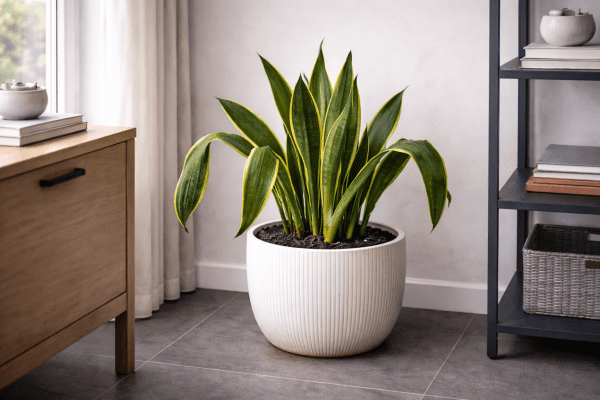
Snake Plants often show problems slowly, which makes early signs easy to miss. Use the table below to match what you’re seeing with the most likely cause and the correct response.
| Problem you notice | Likely cause | How to fix it |
| Leaves feel soft or mushy at the base | Soil staying wet too long | Stop watering immediately. Check that the pot has drainage, switch to fast-draining soil, and let the plant dry out fully before watering again. |
| Leaves are wrinkled or curling inward | Underwatering for an extended period | Water deeply once, allow excess water to drain, then return to letting the soil dry completely between watering. |
| Yellowing leaves that feel limp | Overwatering or cold, damp conditions | Reduce watering, move the plant to a warmer spot, and confirm it isn’t sitting in pooled water. |
| Plant leaning strongly to one side | Light coming from one direction | Rotate the pot slightly every few weeks or move it closer to the window for more balanced light. |
| Growth has stopped for months | Too little light | Move the plant within ~0.5–2 m of a window or add a small grow light if it’s placed deeper in the room. |
| Brown, dry leaf tips | Stress from inconsistent watering or cold drafts | Keep watering consistent (only when fully dry) and move the plant away from cold air or open windows. |
| Leaves snapping or creasing | Physical damage | Relocate the plant to a low-traffic area. Damaged leaves won’t heal, but new growth will be healthy if conditions improve. |
Most Snake Plant issues come down to water, drainage, or light placement. Fixing those three factors usually stops problems from progressing and allows the plant to recover on its own.
Better Alternatives If a Snake Plant Isn’t Right for You
If a Snake Plant doesn’t match your space, lifestyle, or safety needs, that’s not a dead end. These alternatives solve the most common reasons people rule Snake Plants out, while keeping maintenance manageable for apartment living.
- If you need a pet-safe option:
Consider a Cast Iron Plant. It’s tough, slow-growing, and handles lower light well, without posing the same risk to curious pets. - If you want softer, more flexible leaves:
A Parlor Palm offers a gentler look and is less likely to cause damage in tight or high-traffic areas, while still working well indoors. - If you like low-effort care but want a different look:
A ZZ Plant provides similar drought tolerance and upright structure, with thicker, glossy leaves. Just note that it’s also not pet safe. - If your space is deeper inside the apartment:
Plants that tolerate consistently lower light, such as certain pothos varieties, can be more forgiving when windows are farther away.
Choosing the right plant isn’t about finding the “best” option overall, it’s about finding the one that fits your space, habits, and constraints. The right match will always feel easier to live with day to day.
Final Verdict: Should You Get a Snake Plant?
A Snake Plant is a great choice for apartment living if you want a low-effort plant and are comfortable letting it dry out between waterings. When placed within window range and set up with proper drainage, it’s one of the most forgiving indoor plants you can own, including popular varieties like Sansevieria ‘Laurentii’ and ‘Zeylanica’, which follow the same care rules.
That said, it isn’t for everyone. If you have pets that chew plants, enjoy frequent hands-on care, or need a plant for a dark interior corner without added lighting, you’ll likely be happier with a different option.
For the right home, the appeal is simple: minimal care, a clean upright look, and a plant that stays manageable over time. If that sounds like what you’re looking for, a Snake Plant is well worth adding to your space.
If you’re setting up your first indoor plants, our free indoor gardening resource library includes simple checklists and tools that help avoid the most common beginner mistakes.
Disclosure: Some links are affiliate links. If you buy through them, we may earn a small commission at no extra cost to you.

