


Can You Grow Peonies in Pots? Proven Tips for Thriving Container Blooms
Why Grow Peonies in Pots?
Peonies are famous for their showy blossoms, but many gardeners assume they need large garden beds. The truth is, potted peonies can thrive just as well — and for small-space gardeners, containers open up exciting possibilities.
Growing peonies in pots gives you more control over potting mix, drainage, and pot size, which are often limited in a balcony or patio garden. Instead of struggling with heavy clay or poor soil, you can create the perfect mix in one large lightweight 20‑inch resin planter (easy to move and sized right for peony roots).
Another advantage is flexibility: pots can be moved to follow the sun, sheltered from strong winds, or shifted when redesigning your space. For renters, potted gardening means you can take your favorite plants with you.
And perhaps the biggest benefit — containers make beautiful peonies accessible to anyone, even without a backyard. With the right container and care, these dramatic flowers can brighten up balconies, patios, and compact courtyards. For inspiration, check out our balcony gardening ideas guide to see how flowering plants can completely transform a small space.

Disclosure: Some links are affiliate links. If you buy through them, we may earn a small commission at no extra cost to you.
Watch: How to Grow Peonies in Pots
Learn how to grow and care for peonies in containers with this easy step-by-step video.
Choosing the Right Pot Size for Peonies
When it comes to peonies in pots or containers, the potting container you choose can make or break your success. Peonies need space for their roots to establish, so always go for a pot at least 18–20 inches wide and deep (around 10–15 gallons). A smaller pot might work for the first year, but your peony will quickly outgrow it and fail to peony flowers including traditional ceramic pots for a classic look.

For small-space gardeners, weight also matters. Lightweight resin or fiberglass planters are ideal for balconies because they’re easy to move when full of soil. If you prefer a more decorative look, ceramic pots are beautiful but heavy — so consider placing them on a heavy‑duty rolling plant caddy to make repositioning simple.
Drainage is non-negotiable. Always pick a pot with at least one large hole at the bottom, and if possible, elevate it slightly on pot feet to prevent waterlogging. Healthy drainage ensures that your potted peony plants don’t suffer from root rot, one of the most common issues in potted gardening. including traditional ceramic pots for a classic look.
For more tips on making the most of your pots and planters, see our guide on simple indoor gardening tools that make pot care much easier.
Best Soil Mix for Beautiful Peonies in Pots including traditional ceramic pots for a classic look
Getting the potting soil right is just as important as the container itself. Peonies are long-lived plants, and when they’re grown in pots, the soil is their entire world. A poor mix can mean soggy roots or nutrient deficiencies, while a well-balanced one sets them up for years of healthy growth and flowering.
Peony require a loamy, well-draining potting mix enriched with organic matter. A high-quality blend like FoxFarm Ocean Forest Potting Soil – 12 qt offers the right balance of aeration, moisture retention, and nutrients for container-grown peonies. You can also improve drainage by mixing in perlite or coarse sand to keep root rot at bay.

Adding a few scoops of compost or aged manure at planting time provides slow, steady nutrition. Peonies prefer soil with a neutral to slightly alkaline pH (6.5–7.0), so avoid mixes that are too acidic.
If you’re new to container gardening, see our guide on simple indoor gardening tools — a soil scoop and moisture meter will make preparing and maintaining your peony mix much easier.
Peony Varieties That Suit Pots
Not every peony is a good fit for pots. Because containers limit root space, it’s best to choose compact varieties that adapt well to confined conditions.
Dwarf and border peonies are the easiest to manage in containers, producing lush foliage and blooms without overwhelming the pot. Itoh hybrids (also called intersectional peonies) are another excellent choice — they combine the hardiness of tree peonies with the compact size of herbaceous ones, making them a favorite for small gardens.

If you’re tempted by tree peonies, keep in mind that they need very large containers and plenty of root space. For most balcony gardeners, sticking to dwarf or hybrid types will be more successful.
If you’re ready to add some to your garden, consider ordering bare‑root varieties like the ‘Bartzella’ Itoh Peony, which stays compact and performs well in containers.
For additional flower options that work well in small apartments, check our guide to hard-to-kill houseplants — perfect companions for your container-grown peonies.
Step-by-Step Guide to Planting Potted Peonies

Planting potted peony plants is straightforward, but getting the details right is key to long-term success. Here’s a simple process to follow:
- Choose your pot — Select a container at least 18–20 inches wide and deep with good drainage holes. Place it on pot feet or a rolling plant caddy if it will sit on a balcony.
- Prepare the soil — Fill the bottom third with a well-draining mix (loamy soil, compost, perlite). Avoid heavy or compacted soil.
- Position the root — Place the peony crown so the eyes (buds) sit just 1–2 inches below the surface. Planting too deep often leads to poor blooming.
- Backfill and water — Gently fill the pot around the root and press down lightly to remove air pockets. Water thoroughly so moisture reaches the root zone.
- Label and place — Add a marker with the peony variety, then position the pot in a location with at least 6 hours of full sun daily.

Tip: A soil moisture meter is handy to check when it’s time to water — see our guide on simple indoor gardening tools for recommendations.
Caring for Plant Peonies in Containers (Tips for Growing Strong Blooms)

Once planted, peony planters are surprisingly low maintenance, but they do need consistent care to thrive in small spaces. Focus on these essentials:
Sunlight & Position
Peonies love sunshine. Aim for at least 6 hours of full sun daily. On balconies with shifting light, rotate your pot every week to keep growth even. If your patio doesn’t get enough natural light, a full-spectrum grow light can help keep foliage healthy and blooms strong.
Watering Needs
Deep watering is better than frequent light splashes. Water when the top 1–2 inches of soil feel dry, letting water run freely through the drainage holes. To avoid overwatering, a simple soil moisture meter gives you an instant read on whether your peony needs a drink.
How to Fertilize Peonies in Pots
Peonies are heavy feeders in containers. In early spring, use a balanced slow-release fertilizer (10-10-10) to fuel strong roots and shoots. After blooming, feed again to encourage next year’s buds. Avoid high-nitrogen lawn fertilizers — they encourage leaves but reduce flowering.
Supporting Blooms
Large peony flowers can get heavy and flop in containers. Use a set of adjustable plant support rings to keep stems upright; on windy balconies, placing the pot against a railing or wall adds extra stability. On windy balconies, placing the pot against a railing or wall adds extra stability.
For more general maintenance ideas, see our simple indoor gardening tools guide — many of the same tools work beautifully for container peony care.
Overwintering Peonies in Pots: How to Protect Them in Winter
Peonies need a period of cold dormancy to bloom well the following spring. In garden beds, winter takes care of this naturally, but in containers the roots are more exposed and need extra protection.
If you live in a region with cold winters, group pots together against a sheltered wall, wrap the container in insulating frost covers, and add a thick layer of mulch on top of the soil. This helps prevent the root ball from freezing solid.
In mild winter climates, peonies may not get the chilling hours they need. You can simulate winter by moving pots to the coldest area available, or even refrigerating bare-root tubers for 6–8 weeks before replanting.
No matter your climate, let the foliage die back naturally in autumn, then trim it down. This ensures the plant stores enough energy in its roots to survive dormancy and come back stronger.

GUARANTEE YOUR PEONY BLOOMS NEXT SPRING!
Protecting your potted peony roots from freeze-thaw cycles is the single most important step. We’ve compiled our entire tested method into one simple, printable guide.
Download the FREE Peony Overwintering Protocol: 4-Step Winter Care System to get:
- The exact temperature range for successful dormancy.
- My personal fixes for the Top 5 Mistakes that kill potted peonies.
- A printable, step-by-step winter prep checklist.
For more seasonal ideas, see our balcony gardening ideas guide — it covers how to adapt your outdoor setup as the weather changes.
Growing Peonies Indoors: What You Should Know
While most gardeners grow peonies outdoors, it is possible to enjoy them indoors in containers — though with a few limitations. Peonies need plenty of sunlight and a cool winter rest, both of which are harder to achieve inside an apartment.
If you’d like to try, place your pot in the brightest south-facing window you have. Without at least six hours of direct light, the plant will struggle. A full-spectrum grow light positioned 12–18 inches above the foliage can help compensate for low-light rooms.

The bigger challenge is dormancy. Peonies must experience cold temperatures for several weeks each year to bloom again. Indoors, this may mean moving the pot to an unheated garage or balcony during winter, or pre-chilling bare roots in the refrigerator before planting.
If you’re looking for easier options that thrive indoors year-round, explore our list of hard-to-kill houseplants — low-maintenance companions that add greenery without the seasonal fuss.
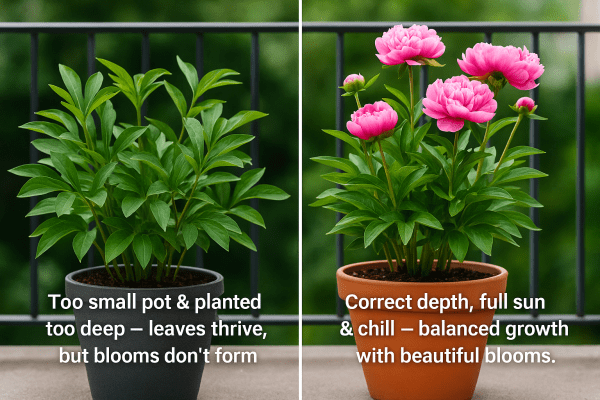
No Blooms? Fix Depth, Pot Size, Sun & Chill
One of the biggest frustrations for balcony gardeners is when potted peonies refuse to flower. If yours are producing leaves but no flowers, check these common issues:
- Planted too deep — Peony buds (eyes) should sit just 1–2 inches below the soil surface. If they’re buried deeper, flower may be delayed or absent.
- Pot too small — A container smaller than 18–20 inches doesn’t provide enough root space. Upgrade to a larger pot to encourage flowers.
- Not enough sun — Peonies need 6+ hours of direct sunlight daily. A Dr.meter LX1330B light meter can help you verify whether your balcony truly gets enough light.
- Over-fertilizing with nitrogen — Lawn food or high-nitrogen fertilizers produce lush leaves but few flowers. Switch to a balanced slow-release mix.
- Too young — Peonies are slow starters. It can take 2–3 years for new plants to flower, even under ideal conditions.
- Lack of winter chill — Without cold temperatures, buds don’t set. Ensure your pots are left outside in winter or simulate dormancy with refrigeration.
For more beginner-friendly plant care troubleshooting, keep an eye on our upcoming plant care library — it will covers tips for keeping container plants healthy in small spaces.
FAQs
Can peonies bloom in pots?
Yes — peonies can bloom beautifully in pots if given enough space, sunshine, and proper soil. Choose a container at least 18–20 inches wide, keep the crown just 1–2 inches below the surface, and ensure at least 6 hours of direct light daily.
Can I leave peonies outdoors in winter?
Yes, container peonies should stay outside in winter. They need a period of cold dormancy to flower the following spring. Protect roots by mulching and, in very cold regions, wrapping pots with frost covers.
How often should I repot peonies in containers?
Peonies dislike frequent disturbance, so only repot every 3–4 years, or if the container becomes too small. When repotting, refresh the potting mix and check for healthy root growth.
How long until potted peonies flower?
Peonies are slow to establish. Even with perfect care, new plants often take 2–3 years before producing their first blooms. Patience is key, but once they settle in, they’ll reward you with decades of flowers.
Recommended Gear for Small-Space Gardeners
To get the best results with potted peonies, the right tools and supplies make all the difference. Here are some essentials that help with container selection, soil mix, and blossom support:
- Large Lightweight Planter (18–20 inches)
A spacious pot gives peonies the room and space to grow they need. Look for a 20-inch resin planter that’s deep enough for roots and easier to handle than heavy ceramic pots. - Rolling Plant Caddy
Even a lightweight pot becomes heavy once filled with soil. A durable rolling caddy makes it simple to reposition your peonies for more sun or to protect them from wind. - Quality Soil Mix
Peonies thrive in a soil mix that provides good drainage. A blend like FoxFarm Ocean Forest Potting Soil balances aeration, moisture retention, and nutrients. Add perlite or sand if you want even faster drainage. - Balanced Fertilizer
Container plants exhaust nutrients faster than those in the ground. A slow-release granular fertilizer keeps your peonies fed through the growing season without the risk of overfertilizing. - Plant Supports
Large peony flowers can flop over in small pots. A set of adjustable support rings will keep stems upright and prevent breakage. - Grow Light
If your balcony or indoor spot doesn’t get enough direct sun, a full-spectrum grow light can supplement natural light and keep foliage strong. - Light Meter
Not sure if your container gets enough sunlight? A Dr.meter LX1330B light meter takes the guesswork out and ensures your plant gets the hours it needs to bloom.
For more simple, time-saving gear (like soil scoops, moisture meters, and pruners), check out our indoor gardening tools guide.
Disclosure: Some links are affiliate links. If you buy through them, we may earn a small commission at no extra cost to you.

