

Balcony Gardening Ideas That Instantly Transform Small Spaces
When I first moved into my apartment, the balcony was more “storage zone” than garden. One half-broken chair, a broom, and a box of odds and ends sat out there collecting dust.
Over the years I’ve learned a few simple truths (mostly by trial and error, plus one basil casualty I still remember). Balcony success isn’t about fancy gear; it’s about reading your light, managing wind, and finding best plants that forgive small mistakes.
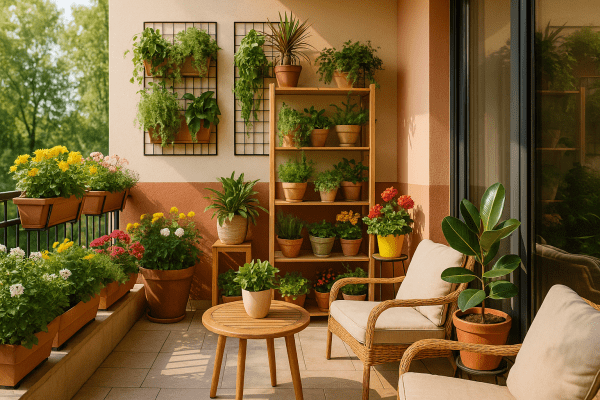
In this guide, I’ll share what works — and what doesn’t — from experiments with different systems, railing boxes, and low-maintenance greens. You’ll also see quick design tweaks that make small spaces look effortlessly lush.
If you’re brand-new to growing indoors, start with Indoor Gardening for Beginners – 30 Day Guide.
Disclosure: Some links are affiliate links. If you buy through them, we may earn a small commission at no extra cost to you.
Step 1 – Evaluate Your Balcony Space’s Conditions
Before buying a single pot, grab your morning coffee and step outside.
No checklist — just you and the air.
Notice how it feels: still or breezy? Warm or sharp?
Every balcony has its own rhythm. Once you sense it, everything else becomes easier.
Sunlight and Shade Direction on Your Balcony Garden
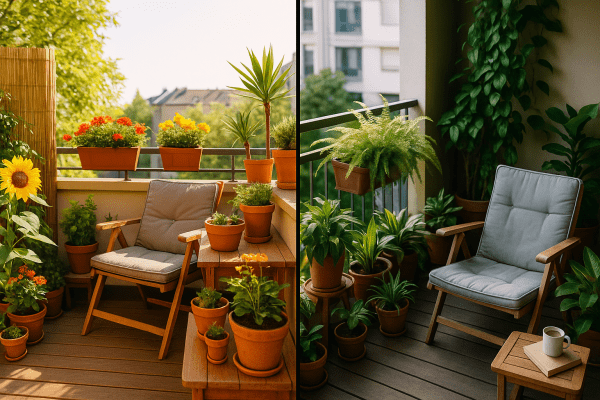
Light decides who thrives and who sulks.
- South-facing location drink the most sun — perfect for herbs, tomatoes, and other sun-loving plants.
- East-facing spots get gentle morning rays that leafy greens adore.
- West-facing areas heat up fast; tough plants like succulents or peppers don’t mind.
- North-facing corners stay cool and shaded — home to ferns, pothos, or peace lilies.
Wind and Weather Exposure in Small Spaces
Pause for a second. Can you feel air brushing past your cheek?
That simple clue says more than any guide.
Higher floors often create “wind tunnels” that dry soil and topple lightweight pots.
If your balcony faces strong gusts, group heavier containers together or add a simple trellis as a windbreak. It slows the air without stealing the view.
Drainage, Temperature, and Garden Safety
After rain, crouch down and touch the tiles. Are they slick and cool or hot enough to sting your palm?
That one test tells you everything about your micro-climate.
Dark flooring stores heat; pale tiles bounce it away. Knowing that helps you choose planters with proper drainage and materials that don’t “cook” the roots.
Step 2 – Choose the Best Plants to Grow in a Balcony Garden
You know that moment when the afternoon sun suddenly hits one railing and the other side stays cool?
Once you start noticing little moods like that — the glare, the breeze, the quiet corner — you’re halfway to picking the right plants.
Forget “picture-perfect.” Real balcony gardening is about matching plants to personality. Some spaces run hot and windy; others feel like calm pockets of shade. The fun part? Finding what thrives there without turning plants need into a chore.
Low-Maintenance Balcony Plants
If you’re the “water your plants -when-I-remember” type (no judgment — same here), stick with forgiving greens.
- Snake Plant (Sansevieria) — practically indestructible. Mine once sat through two heatwaves and a cold snap while I was on holiday.
- Succulents (Echeveria, Sedum) — love sunny and shallow pots; just don’t mix them with thirsty herbs.
- Herbs like mint, thyme, and chives — tiny, useful, and surprisingly tough. Mint will take over if you let it — consider that a friendly warning.
- Pothos — the classic shady survivor; trails beautifully and forgives missed waterings.
Looking for even more effortless options? Don’t miss our roundup of 5 Resilient Indoor Plants That Are Hard to Kill. Several of them are perfect for balcony gardening too.
Edible Plants That Grow Well on a Balcony
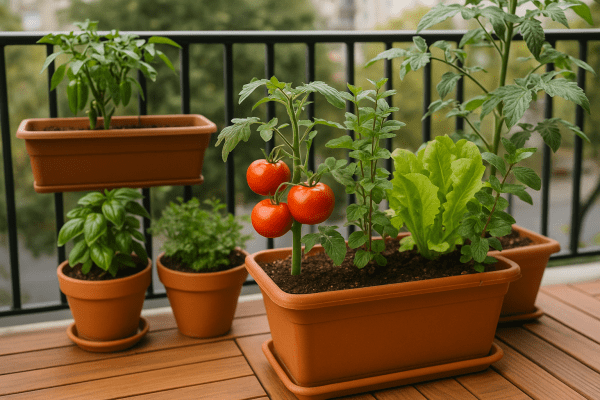
You don’t need a yard to have a herb garden. One tomato plant can make an entire weekend sandwich feel heroic.
- Cherry tomatoes — love full sun on south- or west-facing balconies; they’ll reward you fast.
- Leafy greens (spinach, lettuce, rocket) — prefer gentle morning light; easy to pick leaf-by-leaf.
- Chillies and peppers — heat lovers with serious color drama.
- Mint or basil — best near the door so you’ll actually snip them for tea or pasta.
If you live somewhere warm, pop them in self-watering planters — they save you from wilted regret after hot weekends.
Shade-Tolerant vs. Sun-Loving Balcony Plants
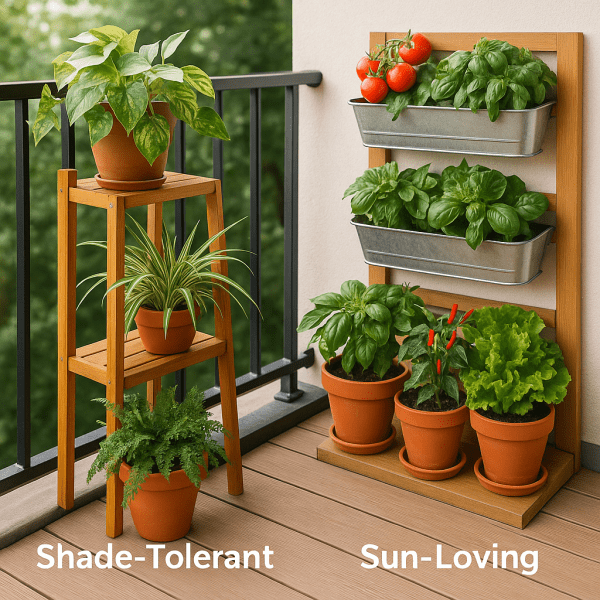
Matching plants to light is where most gardeners mess up at first.
- Sun-lovers (South/West) → basil, lavender, tomatoes, chillies. They crave 6–8 hours of sun.
- Shade-tolerant (North/East) → pothos, ferns, peace lilies, mint. They prefer a gentle, indirect glow.
Wind-Tolerant Plants for Apartment Balconies
Ever had your plants lean like tiny weather vanes? That’s balcony wind for you — cheeky, unpredictable, unstoppable.
- Rosemary and lavender — woody stems, gorgeous scent, zero drama in a gust.
- Compact ornamental grasses or dwarf bamboo — they sway instead of snap (oddly calming to watch).
- Sturdy shrubs like bay or olive — double as natural windbreaks for smaller plants behind them.
Weigh down pots with stones or use heavy ceramic planters so nothing goes airborne.
Quick Tip: Mix a few textures. A soft fern next to a spiky succulent looks intentional, even if you just ran out of matching pots.
Step 3 – Balcony Gardening Ideas That Work in Any Apartment Balcony
Limited square footage shouldn’t limit your imagination. In fact, apartment small gardens often sparks the most creative, renter-friendly setups. These small garden space ideas help you maximize your space while keeping your style—and sanity—intact.
Go Vertical with Hanging Baskets, Trellises, and Wall Planters
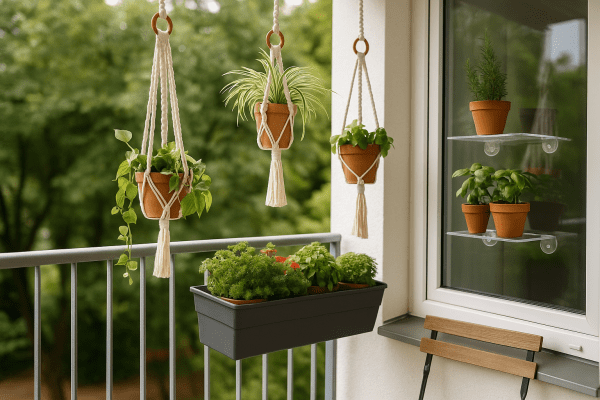
When floor space disappears, look up. Vertical balcony garden design turns blank railings and walls into living artwork—lush, layered, and beautifully chaotic.
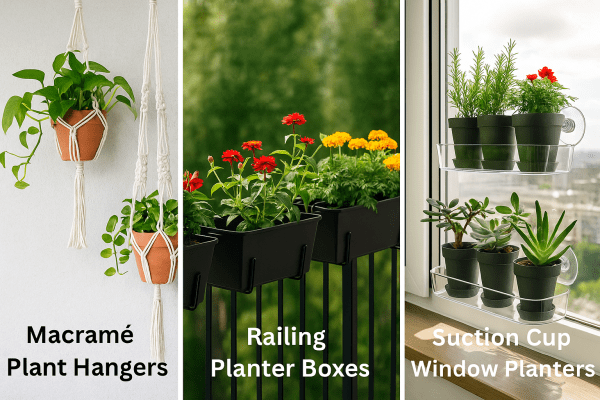
- Macrame Plant Hangers – Soft, boho loops perfect for trailing potted plants like pothos or string-of-pearls View MIPON 3‑Pack Macrame Plant Hangers on Amazon
- Railing Planter Boxes – Ideal for herbs and flowers. These sturdy boxes clip right on, saving precious inches. View LaLaGreen 8‑Pack 17″ Railing Planter Boxes on Amazon
- Suction Cup Window Planters – A sleek solution for glass balconies or terraces. View 12″ Dual-Shelf Acrylic Planters on Amazon
Honestly, that mix of textures and heights makes a small balcony garden feel generous. Effortless.
Use Foldable Stands and Tiered Planters to Maximize Space
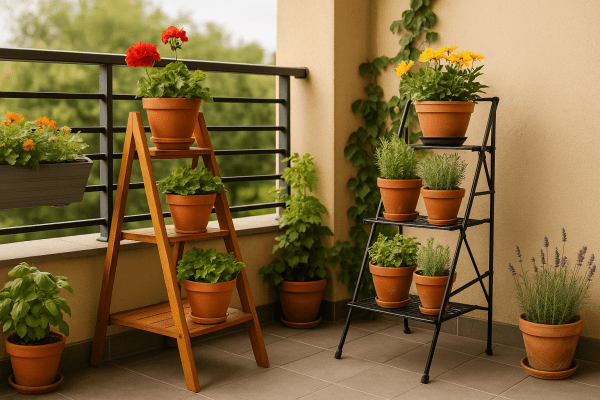
Going vertical isn’t just trendy—it’s perfect for small spaces. Foldable racks and tiered stands give every leaf a spot in the sun.
- Yaheetech 3-Tier Wooden Plant Ladder – Rustic fir wood with fold-flat storage. Perfect for terrace corners or sunny spots that need layers.
View on Amazon - iDavosic.ly 5-Tier Metal Plant Stand– Powder-coated steel, renter-friendly, and weatherproof. I love how it turns a single corner into a mini vertical jungle.
View on Amazon
Pro Tip: TPro Tip: Mix herbs with flowering vines—basil beside morning glory—and tuck trays under your plants to catch overflow. It’s tidy and kind to your downstairs neighbour.
Renter-Friendly and Lightweight Balcony Garden Solutions
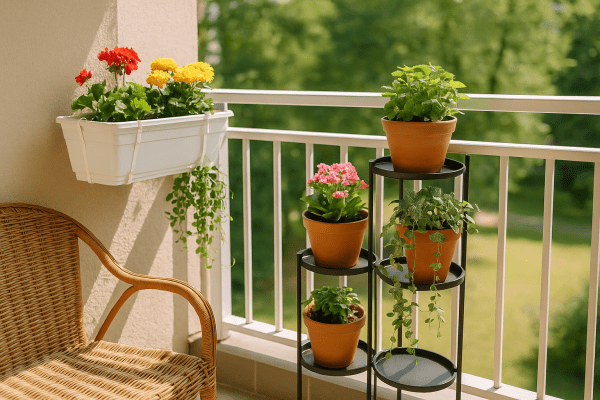
No drilling? No worries. Modern balcony garden design now caters to renters with clever, lightweight systems that move when you do.
- LaLaGreen 4‑Pack Metal Railing Planter Boxes (15 in) – Powder-coated steel with coco-liners. Adjust hangers, zip-tie them, and go.
View on Amazon - Legigo 24‑in Window Box Deck Railing Planter (4‑Pack) – Sturdy steel, soft-lined interiors. Herbs thrive; installation drama = zero.
View on Amazon - Lightweight Plastic 3‑Tier Corner Plant Stand – Weather-resistant polypropylene that folds neatly when not in use. Perfect for renters or anyone rearranging seasonally.
View on Amazon
Pro Tip: Use zip ties or removable hooks to securely fasten railing planters—no drilling required, and everything can be taken down when moving. These renter-friendly options are budget-conscious, functional, and perfect for growing on the go.
Balcony Garden Design Ideas to Enhance Small Outdoor
Start by grouping potted plants by colour and height to create depth—tall ferns behind short herbs, glossy greens beside matte foliage. Add a few hanging baskets to draw the eye upward and make the space feel taller.
For breezy corners, use compact shrubs or tall windbreaks like dwarf bamboo; they soften gusts without blocking the amount of sunlight. Even small climbing plants like jasmine or ivy can frame your railing and transform a plain balcony into a garden that feels curated, not crowded.
Honestly, I still lose a plant or two every summer windstorm—but that’s balcony life, and I kind of love it.
Step 4 – Must-Have Apartment Balcony Gardening Tools and Accessories
Every apartment balcony garden deserves tools that make care easy and clutter-free. If you’ve been exploring new ideas for balconies, you’ll quickly find that the right gear turns small corners into thriving green spaces. These compact, renter-friendly picks are made for every small balcony — keeping your outdoor space tidy and your plants happy.
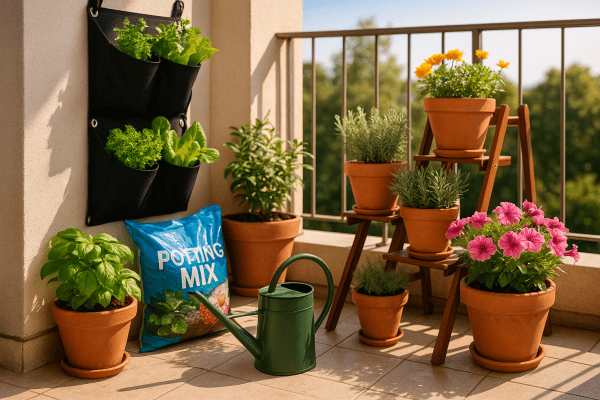
Essential Balcony Gardening Tools for Small Spaces
A slim, stainless-steel design that slides easily between rails and hanging planters. The narrow spout helps you reach roots precisely — no spills, no soggy soil.
View on Amazon
2) Hanging Grow Bags (7‑Pocket Vertical Planter)
Choose an organic blend made for container gardens; it’s lighter, drains well, and prevents root rot. Honestly, you’ll notice the difference the first time you water.
View on Amazon
3) Lightweight Potting Mix (Organic, Container‑Ready)
Perfect for balcony gardeners who want to “grow up.” The breathable felt keeps herbs cool and moist while saving floor space — a little win for every small balcony garden.
View on Amazon
4) Foldable Plant Shelf (Tiered, Space‑Saving)
A foldable metal corner stand that lets you grow up, then tuck it away when needed. Ideal for renters or seasonal rearranging.
View on Amazon
Tip: All the above come in compact sizes and price points suitable for balcony gardening ideas on a budget—prioritize items that are lightweight, foldable, and weather‑resistant for small outdoor spaces.
Quick Setup Tips for a Functional Balcony Garden Layout
Think of your balcony as a mini ecosystem where every inch works together. Before you start rearranging, step outside for a few minutes — notice where wind hits first and where the shade lingers longest.
- Group taller potted plants near the railing to act as gentle windbreaks (if your balcony is windy, use heavier containers).
- Put saucers or trays under your plants to catch overflow and protect your floor.
- Keep herbs and leafy greens close to the door in self-watering pots — perfect for quick snips while cooking.
- Use foldable stands to maximize your space without cluttering walkways.
And—well—expect to move things around a few times. That’s how every successful balcony garden finds its rhythm.
In short: For balcony gardeners, the right tools and accessories aren’t about more stuff — they’re about smarter flow, lighter lifts, and the joy of tending a green corner that finally feels alive.
Step 5: Budget-Friendly Balcony Garden Ideas That Actually Work
You know that feeling when you stare at your balcony and think, there’s no way this tiny thing can fit in a garden?
Well—think again. It’s never about size; it’s about resourcefulness. There is not need for fancy décor or matching pots to create a calm, leafy corner. You just need a few clever ideas and a little patience.
DIY Balcony Garden Hacks Using Household Items
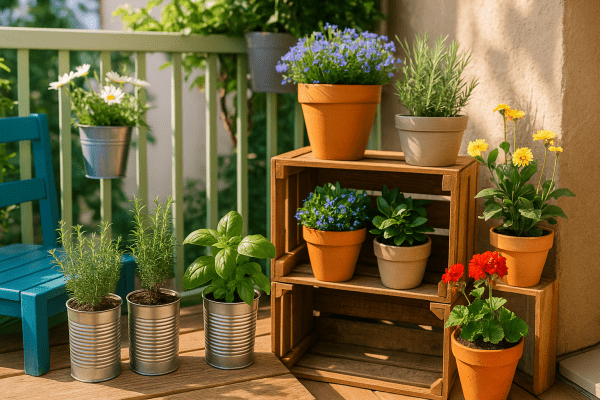
Some of the best gardening ideas start with what’s already at home. Every day, bits and pieces can create a beautiful garden.
Repurposed Containers – Old mugs, teacups, even soup cans, become charming container pots for herbs or succulents. Drill a couple of holes for drainage and—done.
Crate Shelving – Stack up wooden fruit crates or wine boxes to build rustic plant stands. They’re light, cheap, and, honestly, kind of adorable.
Tin Herb Pots – Label old food tins and fill them with basil, mint, or thyme. Looks a bit improvised (in a good way).
Recycled Trays – A chipped terracotta tray under each pot catches runoff and helps keep your plants moist a bit longer.
Pro Tip: These simple swaps save money and make your balcony space look intentionally relaxed—even if you’re working with limited space or a breezy balcony terrace.
And—I mean—who doesn’t love the feeling of turning “junk” into something that actually grows?
How to Style a Balcony Garden on a Budget
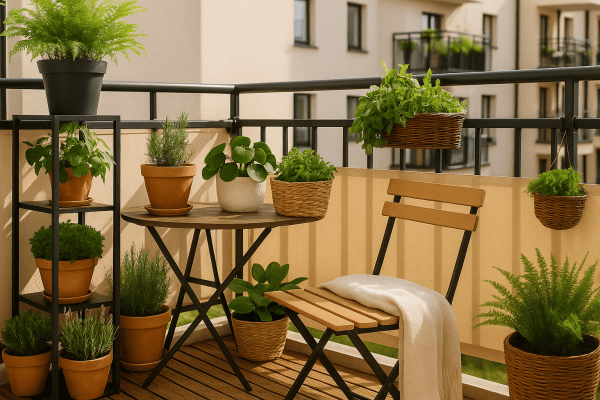
Styling a balcony garden isn’t about how much you spend; it’s about how it feels when you step outside barefoot with your coffee.
Start with a small plan: group plants to grow by sunlight needs, and keep things flexible.
- Mix trailing plants with upright growers for that full, layered look.
- Stick to a color palette—warm terracotta, soft grey, matte white.
- Use self-watering pots if you forget watering (been there).
- Add lightweight baskets or rail planters for instant height play.
Before you start styling, notice how much sunlight your balcony receives. Shift pots around. South side? Basil, chili, and lavender. Cooler corner? Ferns and herbs.
Upcycling and Reusing Planters for Sustainable Balcony Gardening
If you’re anything like me, you’ve probably saved a few random pots thinking “I’ll use them someday.” Good news—that day is now.
Upcycling old planters keeps waste low and maximizes your balcony space without another shopping trip.
- Paint or wrap old terracotta pots to freshen them up.
- Turn leftover wooden boxes into rustic garden pots.
- Slide small trays under your plants to catch runoff (a tiny habit that saves big messes).
- Cluster reused containers together; the mix of textures always looks more “intentional” than uniform rows.
Truth? I still lose a plant or two every summer windstorm—but the ones that survive always make it worth it.
In Short: These low-cost balcony gardening ideas help you grow more greenery, reuse what you already own, and build a truly successful balcony garden—one imperfect, wonderful project at a time.
Step 6 – Protect Your Balcony Garden from Wind, Rain, and Sun
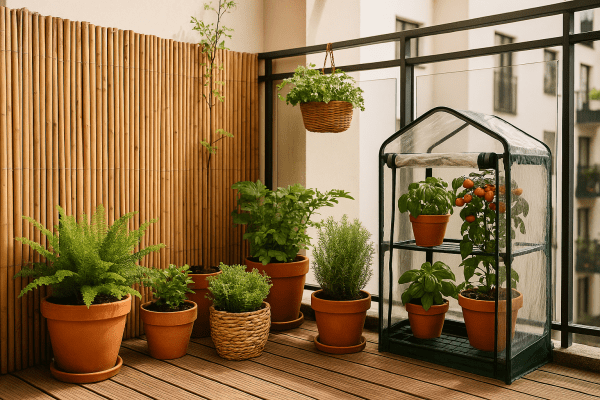
Balcony gardens are beautiful, but they’re also exposed to the elements — especially if you live in a high-rise or weather-prone area. A little weatherproofing can go a long way in keeping your plants healthy and your setup long-lasting.
Shielding Balcony Plants from Strong Winds (Featuring the Small Space Sprouts Wind-Check Protocol)
You know that moment when a calm afternoon suddenly turns into a mini cyclone? Apartment balconies can act like wind tunnels, drying leaves and snapping stems overnight. That’s why we created the Small Space Wind-Check Protocol — a simple way for apartment dwellers to understand their unique airflow before planting a single seed.
The Hidden Threat
Wind stress is the quiet plant killer. Even hardy herbs can struggle if gusts hammer one side all day long.
The 5-Step DIY Wind-Check Protocol
- Observe Patterns (The Gust Audit): Spend a week noting direction and strength morning, noon, and evening. Look for swirling corners or funnel blasts between walls.
- The Tissue Test (The Visualizer): Tie a ribbon or strip of tissue to your railing. The way it flutters shows both exposed and wind-sheltered zones.
- Build a Buffer (The Barrier): Add lattice panels, climbing plants, or vines on the windy side to form a living screen.
- Secure Your Planters (The Anchor): Use heavier terracotta or ceramic pots. Add a tray under your plants to stabilize the base and catch runoff.
- Seasonal Re-Check (The Reset): Wind paths shift after storms or nearby construction. Repeat the audit each season.
Expert Tip: If leaves curl or scorch even when the soil feels moist, it’s not drought — it’s wind burn. Move that pot to a calmer spot immediately.
Protection from Rain, Drainage Issues, and Overwatering
A balcony downpour looks romantic until your pots turn into puddles. Prevent soggy soil by pairing self-watering pots and planters with free-draining mix.
Use saucers or trays to control excess water, but empty them after storms. Choose vertical garden planters or railing boxes with overflow holes. Elevate pots slightly on cork pads to keep roots out of standing water.
Quick Check: Tap the side of a pot — if it sounds dull, it’s waterlogged.
Cold-Weather and Seasonal Balcony Garden Care
Cold snaps can shock tender greens faster than you can say “winter wind.” Shield delicate plants with a thin frost cloth or a clear storage tub turned upside down. Rotate sun-hungry species toward the wall where reflected warmth helps. For a successful balcony garden, focus on tolerant plants like snake plants, ferns, and rosemary that bounce back after chill nights.
Map Your Balcony’s Micro-Climates for Healthier Plants (Featuring the Micro-Climates Map Framework)
Every tiny balcony or terrace has its own micro-climate — some corners bask in full sun, others stay cool and damp. The Micro-Climates Map helps you see those invisible borders so you can maximize your space and match each zone to the right plant.
The 3-Step Mapping Process
- Divide into Four Quadrants: Mark north, south, east, and west sections. This becomes your personal balcony sun map.
- Track Light and Shade: Spend a sunny day noting how many hours of direct light each section gets. You’ll find a Full-Sun Zone, Partial-Shade Zone, Cool-Corner Zone, and Wind-Sheltered Zone.
- Match Plant to Zone:
• Full Sun → succulents, herbs, tomatoes.
• Partial Shade → ferns and leafy greens.
• Cool Corner → seedlings and moisture-lovers.
• Wind Sheltered → delicate flowering plants like Peace Lilies.
Expert Insight: Even a one-metre shift in light can double a plant’s growth speed. Mapping prevents frustration and keeps your small balcony layout working for you, not against you.
Conclusion – Start Small, Grow Big
You know that feeling when you step outside and notice a tiny sprout pushing through the soil? That’s where every balcony garden begins — one pot, a little sunlight, and a bit of curiosity. It’s not about perfection; it’s about noticing how the wind moves through your space and which leaves lean toward the sunlight your balcony receives.
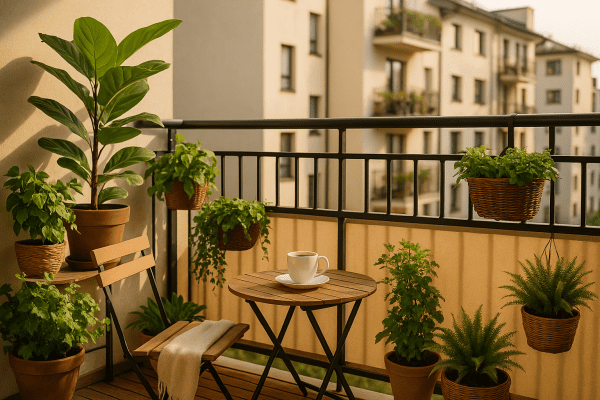
Truth is, the most beautiful balcony gardening ideas usually start by accident — a rescued herb, a reused pot, a spark of weekend energy. Before long, you’ll be learning the rhythm of watering, light, and shade for your plants to grow happily on a small balcony (and maybe forgiving yourself when one dries out … it happens).
Ready to turn your outdoor space into a lush retreat?
Explore more space-maximizing tips and beginner-friendly product ideas at SmallSpaceSprouts.com.
Frequently Asked Questions About Balcony Gardening
How do I make my balcony feel like a real garden?
Play with layers. Hang baskets or trailing vines up high, keep a few potted plants at eye level, and slide some planters along the floor. Mix colors, textures, and even mismatched containers. Add string lights or a bamboo screen and — bam — your balcony or terrace suddenly feels like a pocket garden instead of spare space.
What are the best balcony plants for small spaces?
Go for forgiving types: basil, mint, thyme, and small succulents that don’t mind missed waterings. If your balcony space is tiny, stack upward with hanging baskets or self-watering pots. Compact flowering plants or ferns love partial shade, while cherry tomatoes or herbs thrive in morning sun. The trick? Think layers — not clutter.
What’s the easiest plant to grow on a balcony?
Can’t go wrong with snake plants or pothos — they’re the unshakable friends of every balcony gardener. I’ve left mine through a storm and a heatwave … still green. Mint also forgives almost anything (and sometimes takes over if you let it). Start there; confidence grows quicker than you’d think.
Disclosure: Some links are affiliate links. If you buy through them, we may earn a small commission at no extra cost to you.

