

7 Best Raised Garden Bed Ideas for Balconies & Small Spaces
Why Choose a Raised Garden Bed for Your Balcony?
Creating a balcony garden is one of the best ways to transform an apartment or other small space into a productive green oasis. A raised bed allows you to maximize your limited growing space by providing a contained, soil-rich environment where plants thrive. Unlike traditional pots, raised beds offer better control over drainage, soil quality, and bed height, making them ideal for balconies with limited space.
For beginners, try compact raised bed kits made of wood, metal, or composite. These kits suit small spaces, often featuring lightweight frames, elevated legs, or modular sections for easy adaptation to various balcony layouts. They’re easy to use and eliminate the need for a backyard.
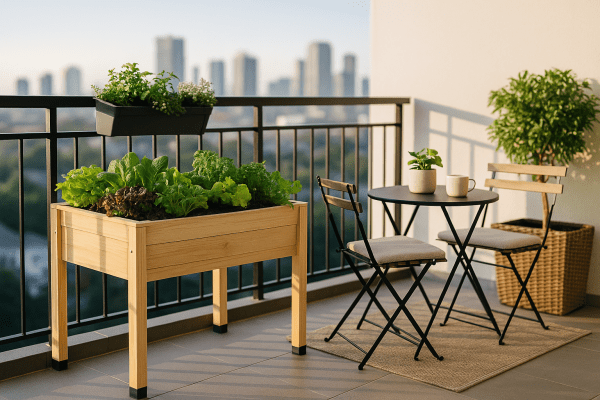
Balcony safety: Check building rules and load limits before placing planters. A 4’×2’ bed, 12” deep, holds about 8 cu ft of mix; when saturated, it can weigh 40–45 lb/cu ft (≈320–360 lb total). Position the bed before filling and use lightweight potting soil.
Benefits of Raised Garden Beds in Small Spaces
A raised garden is one of the most efficient ways to make the most of limited garden space. By lifting your plants off the ground, you gain better control over soil quality, drainage, and sunlight exposure — all critical for balcony and patio gardening.
Raised beds also create the perfect conditions for a vegetable garden, even in tight apartments or condos. Herbs, salad greens, and compact vegetables flourish in these controlled environments, making them perfect for growing healthy food at home.
For small-space gardeners, compact raised bed systems like the Vegepod Mini or the Vego Garden Table Bed are excellent choices. Both are designed to fit neatly on balconies or courtyards, offering depth for root growth while remaining lightweight and portable.
Ideal for Apartment Dwellers
If you live in an apartment, a balcony often doubles as your only outdoor space. An apartment balcony raised bed makes it possible to grow fresh herbs, salad greens, or even compact vegetables without needing a backyard. These beds are designed for small space gardening, giving you the flexibility to grow a variety of garden plants in a contained, efficient setup.
For renters and apartment dwellers, portability is key. Portable raised beds on wheels allow you to move your garden with the sun or rearrange it to suit your space. Similarly, railing planters are an excellent way to maximize vertical surfaces, keeping your floor clear while still producing a lush green balcony garden. Both options make it easy to start small and expand as your confidence grows.
Disclosure: Some links are affiliate links. If you buy through them, we may earn a small commission at no extra cost to you.
Top 7 Raised Bed Ideas for Compact Spaces
1. DIY Wooden Raised Garden Bed
If you love the warm look of timber and want something you can size precisely to your balcony, a DIY raised bed in wood is a classic choice. A wooden raised box insulates roots from temperature swings and brings that “real garden” feel to a small space without overwhelming it.
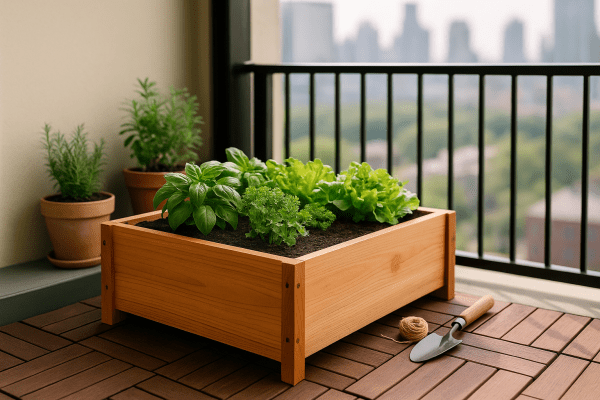
Keep the footprint compact—around 4′ × 2′—and the bed height in the 10–18″ range so you get healthy root depth without unnecessary weight. Line the raised wooden bed with landscape fabric, make sure water can drain freely, then fill with a light mix of quality potting soil, compost, and a little perlite or coco coir. Herbs, salad greens, dwarf tomatoes, and peppers all thrive in this setup.
If you prefer a kit over carpentry, two widely used examples are the Best Choice Products 48″×24″×30″ Elevated Wood Planter and the Yaheetech 48″×24″×30″ Elevated Wooden Planter Box—both assemble quickly and look right at home on apartment balconies. For layout ideas and plant pairings, see our Balcony Gardening Ideas guide.
2. Railing Planters for Small Balconies
When floor space is scarce, railing planters turn the balcony edge into productive growing real estate. Herbs and salad greens are naturals here, and keeping a planter box at eye level makes daily harvesting effortless.
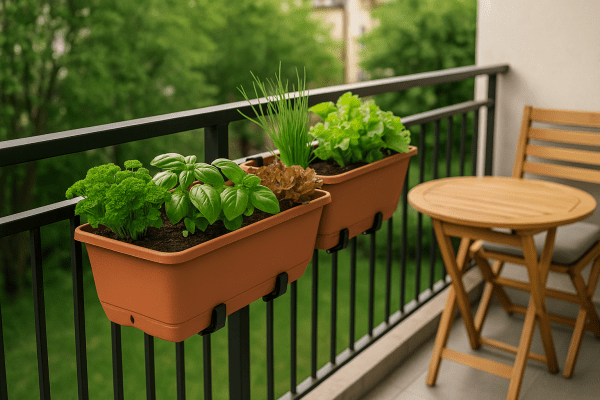
The secret is fit and stability. Measure the rail width first and match the bracket style—many adjustable designs fit 1″–4″ rails—and look for overflow ports or a built-in reservoir so wind and sun don’t dry the mix too quickly. If building rules discourage hanging weight on rails, you can capture the same convenience with a compact, wheeled grow box that parks against the balustrade.
Good, widely used options include the Apollo Exports 24″ Adjustable Railing Planter for a quick, secure fit; the EMSCO Group Bloomers 24″ Railing Planter for classic styling; and the EMSCO City Picker Grow Box on casters if you need mobility and self-watering in one. For layouts that keep pathways clear while maximizing yield, browse our Balcony Gardening Ideas guide.
3. Elevated Raised Bed Garden
Elevated planters come in galvanized metal, wood, and composite finishes; the coated steel options provide a long-lasting, raised look that’s easy to wipe clean on balconies. If bending and kneeling are deal-breakers, an elevated raised bed puts the garden at waist height so you can sow, prune, and harvest comfortably. The extra height improves airflow on tight balconies and keeps plants away from pets. Most elevated designs provide 8–12″ of soil depth—plenty for herbs, salad greens, radishes, bush beans, and compact peppers—without the weight of a deep box.
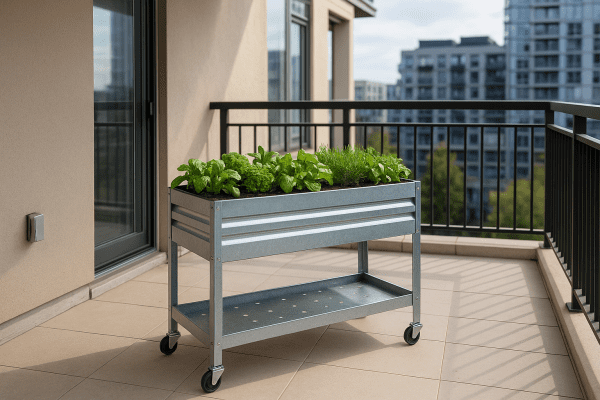
For small spaces, look for a stable frame around 30–34″ tall, a footprint near 36–48″ × 18–24″, and a liner with good drainage so water never pools. Wheels help you chase the sun; a built-in reservoir buys time between waterings on hot, windy days. Three well-proven examples, each with a different strength: the Leetolla Raised gargen bed(with wheels) for easy mobility, the VegTrug 1.8m Raised Planter for generous surface area with a breathable liner, and the Keter Urban Bloomer 12.7-Gallon for tidy, self-watering convenience.
Want to dial in watering and feeding for elevated planters? See our beginner-friendly Indoor Gardening for Beginners — 30-Day Guide for simple soil mixes, moisture checks, and fertilizing routines.
4. Corner Balcony Garden Bed
A corner garden bed turns dead space into a productive nook—perfect on a small balcony where keeping space between beds for movement and airflow matters. Triangular or right-angle planters tuck into a 90° corner so the center stays open. Keep soil depth around 8–12″ to manage weight, line with breathable fabric for tidy drainage, and set the bed in place before filling—corners are awkward to shuffle once full.
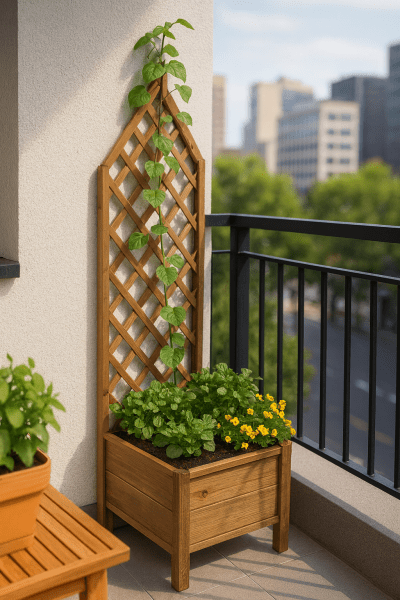
Good balcony-safe Corner Garden Bed examples are:
- MCombo 2-Tier Corner Raised Garden Bed — stacked wooden planters with liners and drainage holes; designed to sit neatly in a corner.
- Acacia Wood Trellis Planter — compact corner planter box with a two-sided trellis for vertical herbs/flowers; self-draining base.
- Corner Trellis Planter, 15.7″×15.7″×59″ (Solid Fir Wood) — a small, contained corner box with lattice; ideal when you want greenery without using floor center space.
Why these work on balconies: each planter has an integrated bottom (no mess on the slab), a compact footprint that tucks into a 90° corner to preserve space between beds, built-in drainage for clean run-off, and optional trellis support to grow upward instead of outward.
Related reading: layout ideas for tight footprints in our Balcony Gardening Ideas guide.
5. Vertical Garden with Trellis
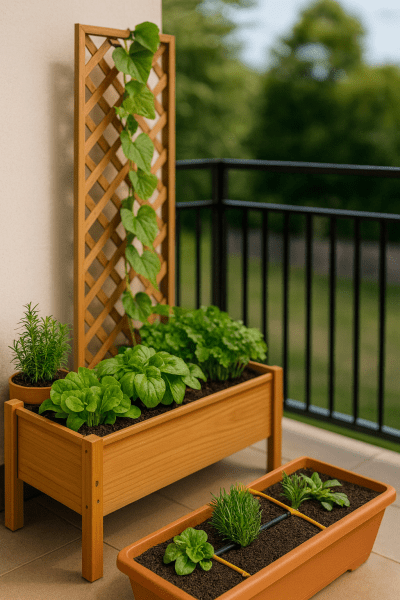
A vertical bed with a trellis is the quickest way to grow plants upward and keep the floor clear on a compact balcony. Train climbing vegetables—like cucumbers, pole beans, peas, or dwarf tomatoes—up the frame while tucking salad greens at the front where they enjoy a little shade. The result is more harvest from the same footprint and better airflow around leaves.
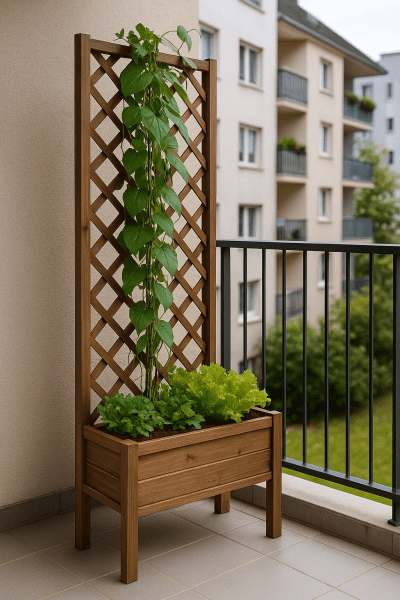
On windy sites, choose a sturdy frame (about 5–7 feet tall) with solid braces, and position the trellis on the leeward side of the balcony so vines don’t act like a sail. Secure stems with soft clips, water consistently (trellised plants drink more), and refresh twine each season.
Good, widely used formats include a lattice box on wheels (easy to reposition), a true arch trellis above a shallow bed for vigorous climbers, or a standalone trellis frame that drops into an existing 2′×4′ planter. Examples to explore: Best Choice Products 48″ Wood Planter Box with Diamond Lattice Trellis (mobile lattice box), S AFSTAR 72″ Raised Garden Bed with Arch Trellis (arched frame over a narrow bed), and Gardener’s Supply Company Arch Trellis for 2′×4′ planters (a durable frame you can pair with your current bed).
Related reading: for balcony layouts that keep paths clear while maximizing yield, see our Balcony Gardening Ideas guide.
6. Stackable Planters for Small Yards
When you’re working with a small space, going vertical lets you turn one square foot into a mini garden space. A stackable raised bed (tower planter) layers multiple tiers so you can tuck strawberries, herbs, and salad greens into separate pockets, then water once from the top as moisture trickles down. They’re light, tidy, and perfect for renters who want yield without a big footprint.
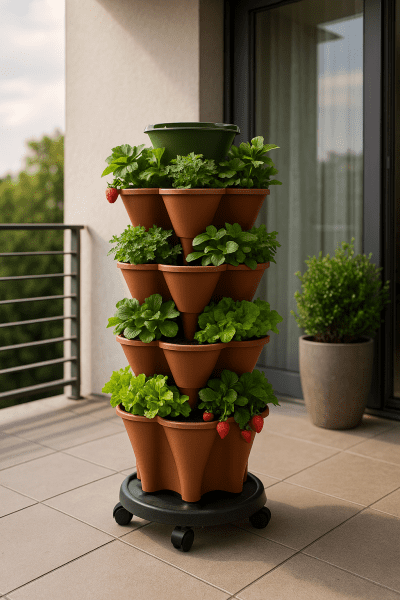
Look for food-safe, UV-stabilized plastic and a top reservoir that distributes water evenly from tier to tier. On sunny balconies, a spinner or wheeled base helps you rotate the tower so each side gets light. If height feels too tall for your railing, you can run fewer tiers early in the season and add more as roots develop.
Three well-proven examples—each at a different price point—are the GreenStalk 5-Tier Original Vertical Planter (patented internal watering and deep pockets), Mr. Stacky 5-Tier Stackable Planter (simple, durable, great for strawberries and herbs), and the VIVOSUN 5-Tier Stackable Planter (budget-friendly with a drip-through design).
Related reading: for balcony layouts that keep paths clear while maximizing yield, see our Window Gardening Ideas guide (link to your article).
7. Portable Raised Garden Bed Kits
When you don’t want to build a raised garden bed from scratch, portable kits let you create a raised bed in minutes—no drilling, and easy-to-install raised planters even on strict balconies. These table-style boxes on casters behave like a compact raised bed table: you can roll them for sun, park them out of the wind, and garden at a comfortable height.
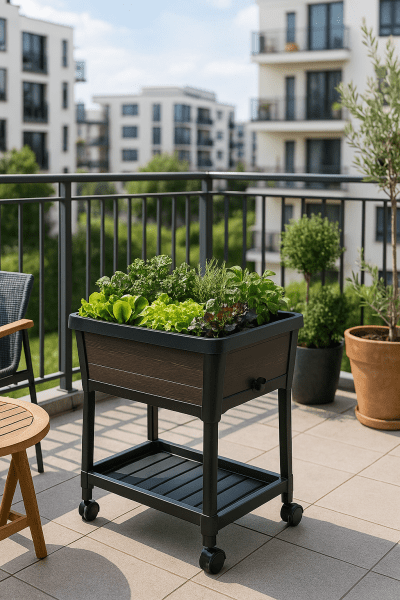
For balconies, keep bed size sensible (around 4′×2′). The height of the bed affects weight as much as footprint; if your bed is 12 inches tall, that’s usually plenty for herbs and greens while staying balcony-friendly. Before you place the bed, check that you can reach the middle of the bed and tend the bed from either side without squeezing past. Skip garden soil or native soil (both are too dense); fill the whole bed with a lightweight potting mix plus compost so water moves through the soil and plants evenly. Clean, rectangular lines also play nicely with any small-space garden design.
Three proven formats cover most needs: a wheeled, self-watering grow box for renters; a mobile wooden planter if you prefer the timber look; and a tidy resin bed with a large reservoir for low-maintenance watering. Good examples to explore include the EMSCO City Picker Raised Bed Grow Box (casters + reservoir), the Best Choice Products 48″×24″×32″ Mobile Elevated Wood Planter (lockable wheels; durable wood look), and the Keter Urban Bloomer 12.7-Gallon (sleek design with gauge and drain tap). For tools that simplify watering and feeding, see our Indoor Gardening for Beginners—30-Day Guide.
FAQs About Raised Garden Beds for Balconies
What is the best material for a raised garden bed?
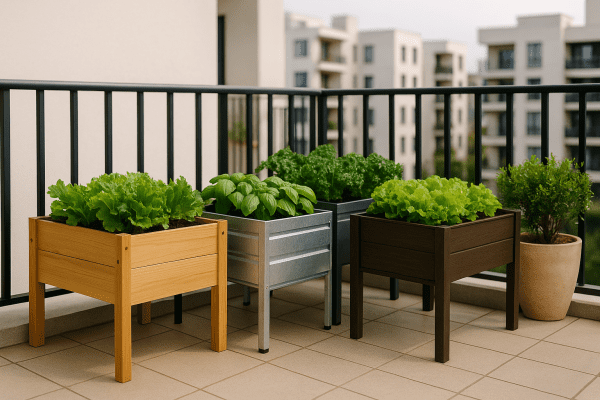
There isn’t a single best raised bed for every balcony. If you like a warm, natural look, durable wood (cedar/cypress) is great for wood raised beds and insulates roots well. If you want low maintenance, a coated metal raised planter gives a clean finish and wipes down easily. Composites are another good all-weather option. Whatever you choose, match the bed size to your small space and make sure drainage is built in.
How deep should a raised bed be for vegetables?
Think in inches tall rather than “as deep as possible.” A bed height of 10–18 inches works for most balcony crops; 12 inches is plenty for salad greens, herbs, radishes, and many compact tomatoes/peppers. Deeper boxes add weight without much benefit, especially in any size garden where structure limits matter.
What soil is best for a raised garden bed?
Skip garden soil and native soil—they’re too dense for containers. Instead, fill your raised bed with a light potting blend (quality mix + compost + perlite or coco coir) and line the bottom of your raised planter with landscape fabric so the bed with soil drains cleanly. Water in stages to settle pockets, then top up to level the whole bed. This recipe is close to the ideal soil for balcony containers and prevents using “too much soil” that compacts.
How much weight can a balcony support for a garden?
Every building is different—check the rules or ask a professional before you place the bed. To stay balcony-friendly, keep footprints compact (for example, 4′×2′), use lightweight mixes, and leave space between beds so you can reach the middle of the bed or tend the bed from either side without leaning on railings. Aim for eight hours of sunlight where possible, but let access and safety decide final placement.
What are the best vegetable garden ideas for small spaces?
Play to your small yard–sized footprint: herbs and salad greens are perfect for growing in shallow boxes; add a trellis to grow plants upward (cucumbers/peas) and keep paths clear. A simple drip irrigation line or self-watering planter keeps moisture steady and tidy—great for balcony garden design and even small kitchen gardens.
Conclusion
Balcony gardening succeeds when form matches function: compact bed size, sensible bed height, lightweight soil, and clean drainage. In this guide, you saw seven balcony-ready ideas—from DIY wood to railing, stackable and portable systems—so you can pick what you actually want to grow and what your beds fit.
If you’re going to build your first setup, continue to Part 2: How to Create a Balcony Raised Garden Bed (Step-by-Step Guide). You’ll learn how to build the planter you chose, line it with landscape fabric, mix and measure soil, and set up drip irrigation—a practical step-by-step guide to help your beds create a tidy, productive corner.
Disclosure: Some links are affiliate links. If you buy through them, we may earn a small commission at no extra cost to you.
