

The Best 8 Houseplants for a North-Facing Window (Low Light Indoor Plants That Thrive)
I’ve lived with a north-facing window for a few years now, and after a lot of trial and error, I finally figured out which indoor plants actually enjoy that gentle low light. Some houseplants surprised me by thriving here; others didn’t make it at all. These are the best plants that stayed happy in my space and kept growing even in the softer north-facing light.
Disclosure: Some links are affiliate links. If you buy through them, we may earn a small commission at no extra cost to you.
Why Houseplants for a North-Facing Window Need Special Low-Light Care
My north-facing window has a very calm light. It’s the kind of soft shade that fills the room without ever fully brightening, and it took me a while to understand how different it is from the stronger light you get on the other sides of a home. Some indoor plants settle into it very easily, but others react in ways I didn’t expect at first.
Watch:5 Low-Light Plants That Thrive in North-Facing Windows
This video walks you through the 5 best indoor plants that thrive in a north-facing window, with real examples, care tips, and low-light troubleshooting.
One thing I learned early was how long the soil stays damp. I’d water a plant, think it was ready for a drink four or five days later, and then realise the pot still felt cool and heavy. I kept poking the soil with my finger because I couldn’t believe how slowly it dried. It wasn’t overwatering. It was just the low light slowing everything down.
I also noticed my plants leaning forward like they were trying to look outside. They stretch toward the window more in a north-facing room. I ended up moving a lot of them much closer to the glass. It looks strange at first, but the plants really do grow better when they’re right there in the brighter part of the room. The living area feels quieter too, almost chilled, but that cooler air lowers humidity a bit, and some of my slower growing plants reacted with crisp tips.
As noted by horticulture experts at Penn State University, many low-light houseplants have a natural trait called ‘high plasticity,’ meaning they can slowly adjust their leaf structure to capture more available light over time. That insight explained why my plants became noticeably fuller after I moved them closer to the glass.
Eventually, I bought a small hygrometer because I got tired of guessing why certain leaves were drying out. It helped more than I expected.
Small Digital Hygrometer
Tells you how dry the air gets in cooler rooms, which solves a lot of the “why is this leaf unhappy” mystery.
The Exact Hygrometer I Use
I also keep a mini USB fan near the plants. I switch it on every few days when the room feels too still. It gives just enough airflow to help the soil dry properly.
Mini USB Airflow Fan
A small, quiet fan that keeps the air moving around the pots so they don’t stay damp for too long.
Boost Airflow (I Used This One)
How to Check Light in a North-Facing Room (Soft Shadow Light Map for Indoor Plants)
When I first tried to figure out what “low light” actually meant in my North-Facing room, I realised pretty quickly that guides online weren’t giving me the full picture. They kept using terms like “indirect light” or “soft shade,” but none of that helped me understand what was happening in my own space. So I started paying closer attention, just little moments during the day, to see how the room behaved.
What Low Light Looks Like in North-Facing Windows
The biggest thing I noticed was how steady the brightness stayed. My north-facing window never gets direct sun. Not even for a second. Even at midday, the room sits in this calm kind of glow, bright enough that I can read near the window without turning on a lamp, but not bright enough to cast a sharp shadow anywhere. It’s a soft, gentle type of light that most north-facing window plants seem to like. They don’t get startled by sudden bursts of brightness.
Cloudy days were interesting too. The room dipped a little darker, but not into that “gloomy” type of dark. Just softer. I learned that a lot of popular indoor plants that thrive in low light actually prefer this consistency.
One small accident taught me something else: surfaces really do affect how light behaves. I moved a plant from a matte wooden shelf to a glossy white shelf, and it perked up in just a few days. The little bit of extra light bouncing off the glossy surface made enough difference to help it grow more evenly. If you want to boost the brightness just a touch, a clean, glossy shelf works surprisingly well.
Here’s a shelf very similar to the one I used: Glossy White Floating Shelf
The Hand Shadow Test for Low-Light Houseplants
The simplest test I still rely on uses nothing more than my hand. Around midday, I stand near the window and put my hand between the glass and something like the wall or the table. If the shadow looks faint or slightly blurry, that’s classic north-facing low light. That means your houseplant is getting indirect light, not direct sun, exactly what low-light plants usually want.
Light Map for Plants That Thrive in Low-Light Rooms
Once I got used to how the brightness behaved, I started noticing little “pockets” in the room. Some spots stayed slightly brighter because of the wall colour or because a reflective surface nearby bounced a bit of extra light around. Other spots were definitely dimmer, and those became the places I used for slower-growing plants.
To keep track, I started marking a few of these spots on the window frame with tiny sticky notes. Nothing fancy, just a reminder of where the softest shade sits. It’s a simple trick to figure out the best positions for household plants that thrive in low light without needing anything high-tech.
If someone prefers exact numbers instead of guessing, a proper light meter can help. I tried one out of curiosity just to see how the light in different corners compared throughout the day, and it was surprisingly helpful to confirm what I was already noticing with my eyes.
This is the light meter I tested: Light Meter for Indoor Plants.
North-Facing Watering Correction Protocol for Low-Light Houseplants
When I first started growing indoor plants in a low-light north-facing window, the biggest shock wasn’t the light… it was how long the soil stayed wet. I’d water a plant, wait four or five days, touch the soil, and it still felt cool and soggy. I kept thinking something was wrong with the plant, but really it was the slower evaporation in that gentle, indirect light. Once I realised that, I stopped treating every plant like it lived in a bright room and adjusted how I watered.
Why Plants in Low-Light North-Facing Windows Stay Wet Too Long
Most household plants that grown in low light simply don’t dry fast enough. The window never gets direct sun to warm the pot, so moisture lingers in the soil. My low-maintenance plants were supposed to “tolerate anything,” but in this low-light window, they struggled because their roots stayed wet for too long.
Another thing I didn’t expect was how the window frame itself affects evaporation. A cool wall, a shaded corner, even a wider pot sitting flat on a cold sill, all of these slow things down even more. Once I saw that pattern, it made sense why some pots stayed damp twice as long as others.
4-Step Watering Protocol for Plants That Thrive Indoors
After a lot of trial and error, this is the beginner-friendly protocol that finally worked for me:
1. Check moisture before watering (always).
I use a simple moisture meter because the soil often feels dry on top but is still wet halfway down.
2. Water only when the middle layer is slightly dry.
Not bone dry, just past the “cool and damp” stage.
3. Water slowly, letting the soil absorb evenly.
In low light, dumping water quickly leads to pockets that never fully dry.
4. Improve airflow around the pot.
Even shifting the pot forward by 10 cm changed how fast my indoor plants dried.
Following this cut my overwatering problems almost instantly.
Tools to Enhance Your Indoor Garden in Low Light
When I finally accepted that my north-facing plants would always dry out slowly, a few small tools made a huge difference. The first was a basic moisture meter. Instead of guessing, I could see when the soil was actually dry enough to water. I use a simple probe style one like this on Amazon:
Check the current price of this soil moisture meter
I also started lightening the mix in my indoor pots. A chunky pumice and perlite blend keeps the soil airy so roots do not sit in a heavy, wet mass. Something like this houseplant mix works well in low light rooms:
See the chunky pumice/perlite mix I’d pick
For the plants that really hate wet feet, I like self-aerating pots with an internal riser so extra water can drain below the root zone. They are handy for small indoor plants you do not want to hover over:
View a self-aerating pot option on Amazon
If your room feels extra dry, a non-electric ceramic humidifier can quietly add a little moisture to the air right around your plant shelf. It works through natural evaporation — no cables, no power, no noise — which is perfect for low-light rooms that already run a bit cool.
This is the simple ceramic humidifier I’d pick on Amazon: non-electric ceramic humidifier.
Used together, these small upgrades quietly enhance your indoor garden and keep low light plants much happier between waterings.
Vertical Layering Tips to Enhance Your Indoor Garden in a North-Facing Window
Why Vertical Layering Helps Low-Light Plants Thrive
One thing I learned early with north-facing window plants is that the room never has just one level of low light. It has pockets, some soft, some dimmer, and stacking plants vertically helped me use every bit of that light instead of letting half the room sit empty. Low light doesn’t travel far horizontally, but it does drift downward like a gentle sheet. By lifting some plants up, I could keep the “plants that thrive in low light” in the brighter band, and tuck slower growers on lower shelves where the shade is deeper.
Once I figured this out, my indoor plants started growing more evenly. Instead of only the window-adjacent pot doing well, I suddenly had three or four plants sharing the same strip of indirect light.
Floating Shelves for North-Facing Window Plants
Floating shelves became one of the easiest ways to make more space around my north-facing window. I started with narrow shelves because they don’t block the little light I had, and they look clean even in a small room. Most indoor plants don’t need full sun; they just need to sit slightly closer to the window than whatever’s below them.
I tested a few shelf types, but white or metal ones reflected light back onto the leaves just enough to help smaller plants perk up.
Two shelf options I’ve personally tested:
- White Metal Floating Shelf Set – for a lightweight, narrow, plant-friendly.
This is the exact set I recommend on Amazon: White Metal Plant Shelf Set. - White MDF Floating Shelf Set – for a sturdier, deeper option that holds more weight.
Check the white floating shelf set I recommend on Amazon: Engineered Wood White Floating Shelves.
Small changes like this helped me lift the plants that needed more indirect light without crowding the windowsill.
Tension Rod Hanging Systems for Pothos, Ferns & Small Plants
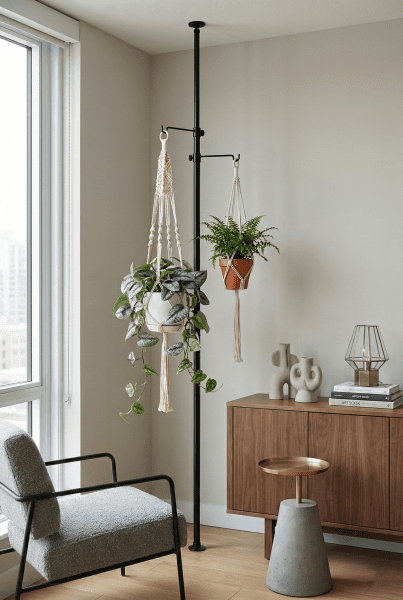
Hanging plants was the next game-changer, especially pothos, ferns, and even my ZZ plant. North-facing rooms don’t blast your plants with heat, so they tolerate hanging positions really well.
Instead of drilling holes, I went with tension-style systems because they’re beginner-friendly and adjustable.
Here are the exact ones I recommend:
- Adjustable Tension Plant Pole – tall, sturdy, and great for pothos trails and light layering.
This is the exact pole I’d pick again: BAOYOUNI 7-Layer Indoor Plant Stands Spring Tension Pole. - Tension Pole Plant Stand – this is a slimmer, more affordable version that still works well for small plants:
Hershii 7-Layer Tension Pole Plant Stand.
To fill gaps between plants, I used simple macramé hangers. Here are two sets I recommend — one with more decorative designs, and one simple/value option:
- Nook Theory Macramé Plant Hanger Set – a beautifully designed, 4-pack set with handcrafted cotton and mixed lengths.
This is the one I used the most for my pothos and ferns: Nook Theory Macramé Hanger Set. - Augshy Macramé Hanger 2-Pack – a clean, simple style at a great price, perfect if you just need a couple of hangers to finish a setup. See the budget option I recommend: Augshy Macramé Hangers (2-Pack).
These light hangers help keep plants in bright, indirect light while freeing up shelf and floor space — especially helpful in small rooms.
Slim Plant Towers for Small North-Facing Rooms
In very small rooms, horizontal space disappears quickly, so I started using slim corner plant stands. They let me stack several “indoor plants that thrive in low light” without blocking the window.
Two narrow options that worked extremely well for me were:
- AZERPIAN 5-Tier Corner Plant Stand A tall, sturdy corner tower with five shelves — perfect for creating a full little “vertical garden” in a dead corner. It fits surprisingly well even in tight rooms, and the layered height helped my low-light plants catch more gentle indirect light. See the exact 5-tier corner stand I recommend on Amazon.
- Bamworld Spiral 4-Tier Plant Stand A slimmer, slightly cheaper option with a clean spiral layout. Each tier gets a touch of indirect light, and the footprint is tiny — ideal for narrow rooms or very small corners. If you want an upgrade, there’s a version with built-in grow lights that helps brighten darker spots. Check the spiral plant tower I’d pick for smaller corners on Amazon.
These towers gave me a full “vertical garden” in a corner that previously did nothing for my plants.
The 8 Best Plants for North-Facing Windows (Low Light Indoor Plants That Thrive)
1. ZZ ‘Raven’ (Zamioculcas zamiifolia ‘Raven’) – Best for Very Low Light
The ZZ Raven has been one of the best plants I have ever grown in a north-facing room. Mine sits in the darkest corner and still puts out glossy new stems every few months. This plant handles low light better than almost anything else and hardly complains if you forget to water it for a while. When I switched it to a chunkier soil mix, it grew even faster and stayed much firmer at the base. If you want something nearly impossible to mess up, this is the one I always recommend first.
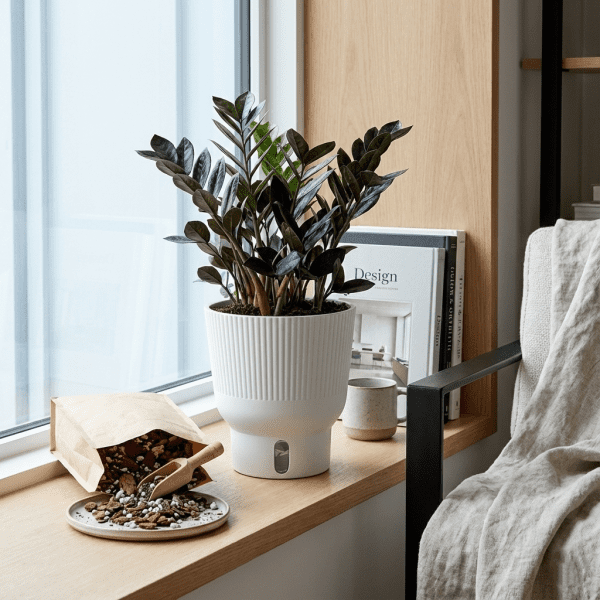
- This is the exact version I’d pick — it already comes in a built-in self-watering reservoir, which helps prevent overwatering in low-light rooms: Live Raven ZZ Plant in Self-Watering Pot.
- I repotted my Raven ZZ into a chunkier mix, and it made the roots firmer and the plant noticeably happier. This is the soil mix I used: Premium chunky soil mix.
2. Fittonia Nerve Plant – Small Low-Light Plant with Colourful Foliage
Fittonias surprised me when I first tried them. I assumed the low light would dull their colours, but the opposite happened. The gentle, even brightness of a north-facing window keeps their leaves soft and hydrated, which prevents the crispy edges people often struggle with. I did notice they like slightly higher humidity, so placing mine on a simple tray of water and pebbles helped a lot. They are small, easy to tuck between other plants, and look amazing in a little cluster.
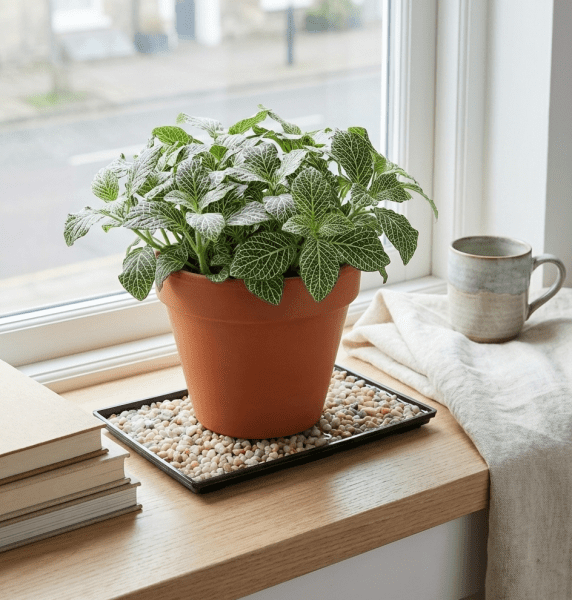
- I tried a few Fittonia varieties, but the white-veined version has always stayed the fullest and perked back up the fastest after drying out. It’s the one I now recommend because it handles low light extremely well and looks great tucked between other plants. Here’s the one I’d pick again: White Nerve Fittonia.
- My Fittonias always did better with slightly higher humidity. Using a simple humidity tray helped stop the crispy edges and kept the plant looking hydrated without extra misting. This is the one I would pick: Brussel Humidity Tray.
3. Scindapsus Pictus ‘Silver Ann’ – Silver Pothos for Low-Light Rooms
Silver Ann has been one of the prettiest trailing plants I have ever placed near a north-facing window. The leaves stay velvety and patterned because the softer light prevents bleaching. Mine trails gently over a shelf and keeps growing without getting leggy. I find that allowing the soil to dry slightly between waterings keeps the silver markings crisp. When mine grew long enough, I propagated a few cuttings in small tubes, and they rooted incredibly fast. It is one of those indoor plants that thrives quietly in the background and rewards you with steady new vines.
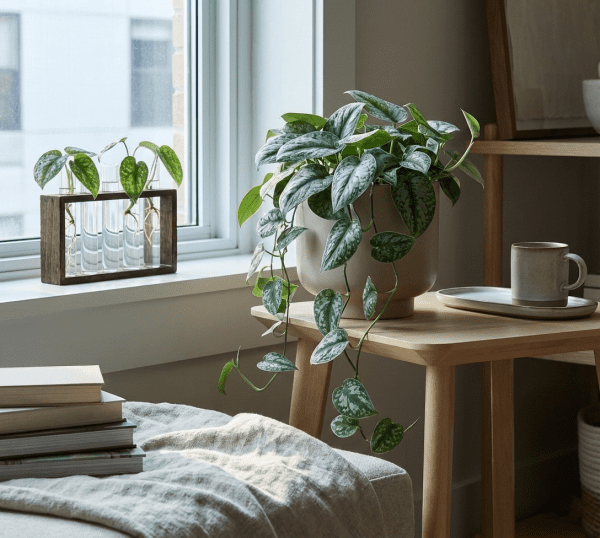
- When my Silver Ann started trailing longer, I took a few cuttings and rooted them in small tubes — they rooted surprisingly fast. Here’s the exact Satin/Silver Pothos live plant I would pick: House Plant Shop | Pothos ‘Satin’ – 4″ Pot.
- These are the propagation tubes I used for my cuttings, and they’ve worked beautifully every time: IVOALODOR Test-Tube Propagation Station.
4. Rabbit’s Foot Fern – Best Fern for Soft Light in North-Facing Windows
Most ferns have tested my patience, but Rabbit’s Foot Fern has been surprisingly tolerant in a north-facing room. The fronds stay soft and bright green, and the fuzzy rhizomes look great draped over the edge of the pot. It prefers consistent moisture, but it does not need the high humidity that other ferns demand. I learned to water a little less in winter because the soil dries slowly in lower light. Once I made that adjustment, it started growing evenly again.
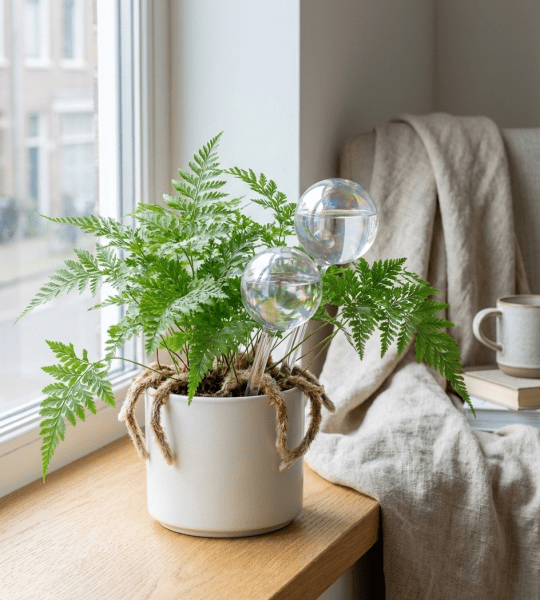
- This is the exact Rabbit’s Foot Fern I bought, and it’s been one of the easiest ferns I’ve kept once I adjusted my watering routine: House Plant Shop | Fern ‘Rabbit’s Foot’ – 4″ Pot
- To keep the soil consistently moist without overwatering, I started using these self-watering humidity globes. They’ve been perfect for this fern in winter when the soil dries slowly. These are the ones I suggest to get: Iridescent Self-Watering Globes (2-Pack)
5. Watermelon Peperomia – Small Indoor Plant for Low-Light Shelves
Watermelon Peperomia has always reacted well to soft shade in my space. The leaves stay plump, and the patterns stay sharp because the north-facing window avoids the harshness that can fade them. I noticed that it grows best when the soil dries about halfway before I water again. It is compact, tidy, and perfect for people who want an attractive plant without the sprawl. When I placed it on a lightweight humidity mat, the foliage stayed much healthier.
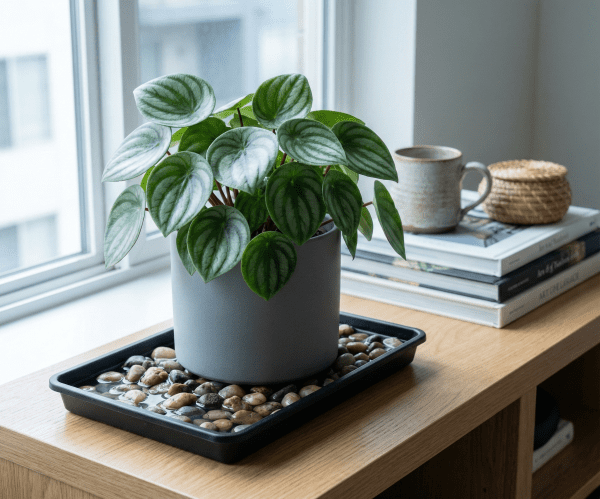
- This is the exact Watermelon Peperomia I’d pick, and it’s the same size that has always done well for me on a low-light shelf :
California Tropicals Watermelon Peperomia – 4″ Pot. - To gently boost humidity without overdoing it, I place mine on a small pebble humidity tray — it helped keep the foliage plump and the patterns sharp without adding any misting. Here is the tray I used to put pebbles in: Rectangular Humidity/Drip Tray (9″ × 6″).
6. Cast Iron Plant ‘Milky Way’ – Low-Light Indoor Plant That Thrives
The Cast Iron Plant has lived up to its name in my home. My Milky Way variety barely noticed the shift when I moved it into a north-facing room. It adjusted quickly and kept putting out slow, steady growth. It tolerates low light, irregular watering, and cooler spots better than almost any plant I own. I found it appreciated a slightly larger pot than expected because its roots spread more horizontally.
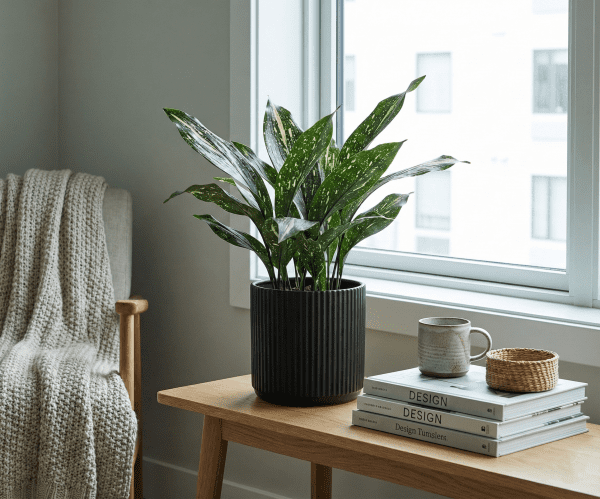
- This is the Cast Iron Plant I’d select, and it’s the same hardy 6-inch size I’ve had the best results with in my low-light room:
American Plant Exchange Cast Iron Plant. - For a sturdier, more stylish setup, I repotted mine into a slightly heavier ceramic pot. It helps stabilise the plant’s wide root spread, and the modern look works well with the Cast Iron Plant’s tall, arching leaves. Here’s the one I now use and recommend:
Basics Fluted Round Ceramic Planter – 8″ (Black).
7. Snake Plant – Best Beginner Houseplant for Low Light Rooms
Snake Plants handle low light better than most people realise. Mine grows slowly in a north-facing room, but it stays upright, strong, and deep green. I water sparingly because the soil stays damp longer in soft shade. This plant is perfect for people who want a clean, architectural shape that always looks tidy. It is one of those “set it and forget it” houseplants that really thrives in consistent, indirect light.
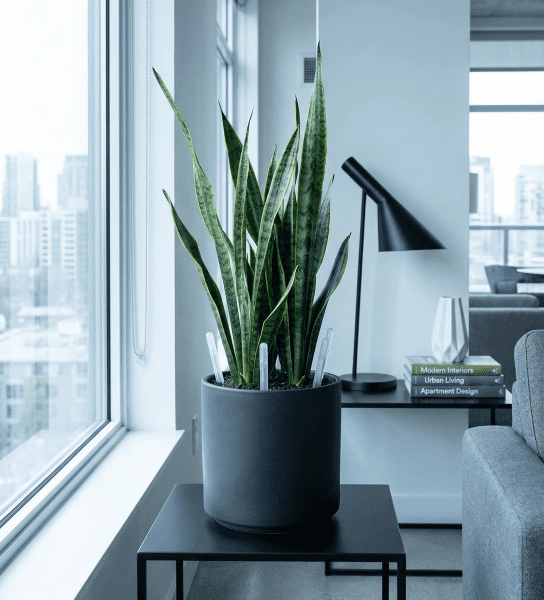
- This is the exact Snake Plant I’d choose, especially for beginners. It arrives already potted and has the clean, upright look that works so well in low-light rooms: Costa Farms Live Indoor Snake Plant.
- To keep the soil drying evenly in lower light, I like using simple root-aeration stakes. They help prevent soggy pockets in the pot and reduce the chance of root rot — especially useful for Snake Plants, which hate sitting in wet soil. Here are the ones I’d pick: Plant Aeration Tubes (9.8-inch, 10-Pack).
8. Classic Green ZZ Plant – Reliable Low-Light Indoor Plant
The classic green ZZ has never given me a single problem in a north-facing window. It grows slowly but consistently and never droops, even when I forget to water. The tubers store enough moisture to handle long dry spells, which is perfect for beginners or busy plant owners. When I used a simple moisture wick system, the soil stayed evenly hydrated without getting soggy, and the plant seemed even happier.
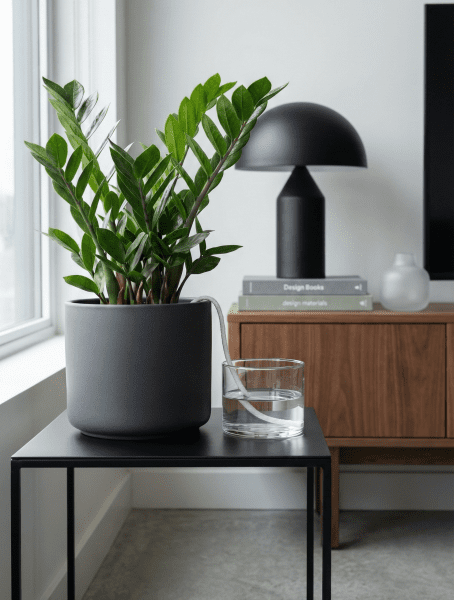
- This is the exact Classic Green ZZ Plant I picked in the past — it’s the same reliable, slow-growing variety that thrives in low-light rooms: Classic Green ZZ Plant in Indoor Décor Pot. Perfect for beginners and forgetful waterers.
- To keep moisture even without overwatering, this simple wick system works beautifully with ZZ tubers:
Self-watering wick cord system. Helps maintain steady moisture in slow-drying rooms without making the soil soggy.
Popular Low-Light Indoor Plants for Windows that Face North (NLP Completeness)
When I first started experimenting with different indoor plants in my north-facing room, I quickly realised some familiar favourites actually handled low light better than expected. Pothos plants were the first to prove themselves. Even in a softer shade, they kept trailing steadily without losing their colour. Spider plants were another pleasant surprise; they adjusted almost instantly and kept sending out little baby offshoots.
I also noticed that many indoor plants marketed as “tolerant” genuinely mean it. A few tropical plants, like compact peperomias and small ferns, stayed happy as long as the soil didn’t stay soggy for too long. And of course, several of the classic houseplants for north-facing windows, like pothos, philodendrons, and spider plants, handled the gentle, indirect light without fading or stretching toward the glass.
This group won’t grow quickly, but they stay healthy and steady, which is exactly what most people want from low-light greenery.
Common Mistakes When Growing Plants in a North-Facing Window Plants
The biggest mistake I made early on with potted plants indoors was watering too often. In a low-light, north-facing window, the soil simply doesn’t dry as fast as it does in brighter rooms. It took me a few sad, yellowing leaves to realise the pot can feel cool and moist long after it looks dry on top. A simple fix is to always check the soil deeper down before reaching for the watering can.
Another common issue is placing plants too far from the window. Because the light is softer, every step backwards makes a noticeable difference. Many low-light indoor plants stay much happier when they sit right up near the brightest part of the room.
I’ve also seen people repot into pots with no drainage because the room “isn’t very bright anyway.” Unfortunately, that only slows the drying time even more. Good airflow in the soil makes a big difference.
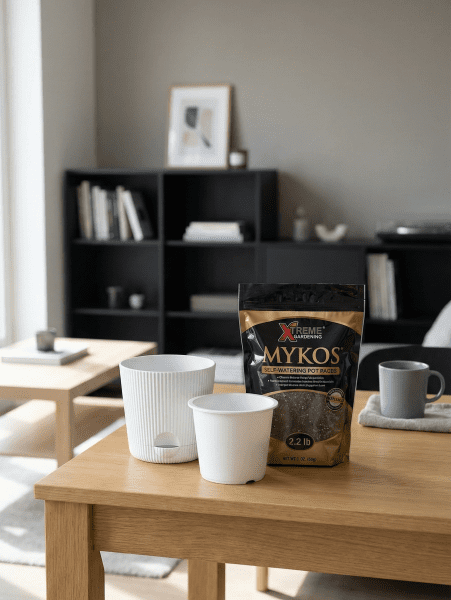
If you want to avoid slow rot or sour-smelling soil, two things help a lot:
- This is the self-watering pot that finally solved my slow-drying soil problem in my north-facing room:
T4U 6-Inch Self-Watering Pot Set. I switched a few of my low-light plants into these, and the built-in reservoir kept the soil evenly moist without staying soggy. It’s been one of the simplest ways I’ve prevented slow rot in cooler rooms. - And to keep the roots healthier in consistently cool soil, this is the exact root booster I now mix into the potting mix:
Mycorrhizal Fungi Root Enhancer. A small sprinkle helped my plants bounce back faster after repotting, and the roots stayed firmer instead of mushy. It’s been a noticeable upgrade for plants that grow slowly in low light.
Avoiding these small mistakes keeps low-light plants growing steadily instead of struggling.
Final Tips to Help Your Indoor Plants Thrive in Low Light
After a few years of living with low-light indoor plants, I’ve learned that success with many of these plants in a north-facing window usually comes down to consistency rather than intensity. Most plants respond really well when the environment stays predictable, steady shade, steady watering rhythm, steady temperature.
A quick habit that helped me is rotating the pots every couple of weeks so the leaves grow evenly. It also stops plants from leaning too hard toward the faint window light. And if a corner of the room feels noticeably darker, I simply move the slow growers closer to the glass and leave the tougher plants slightly further back.
If you’d like tools that make low-light care easier, these guides help:
Self-Watering System Planner: great for maintaining moisture in cooler rooms
A few small adjustments can turn even a dim room into a space where indoor plants thrive.
If you’re looking for more easy, low-maintenance options that grow well in small spaces, you might enjoy this guide: Top 5 Low-Maintenance Indoor Plants for Small Apartments. These plants handle gentle light and slower drying soil really well, making them perfect companions for north-facing rooms.
Disclosure: Some links are affiliate links. If you buy through them, we may earn a small commission at no extra cost to you.

